


Home › Patient Guides › Facelift Recovery Timeline
Patient Guides
Facelift Recovery Timeline: Week by Week to Final Results
By the Facelift in Korea Editorial Desk · Independent · How we report
The short answer
Quick answer: Most patients feel sore and swollen for the first week, have stitches removed around days 5–10, and look presentable with light makeup after about 2–3 weeks. Mild swelling and tightness usually settle over 2–3 months, and the final result typically shows at 6–12 months. Exact timing depends on the technique, your health and your aftercare.
What happens in the first week after a facelift?
The first 72 hours are usually the hardest. Your face and neck will feel tight and swollen, and you may have a compression wrap or garment. Some surgeons place small drains that are removed after a day or two. Pain is usually described as moderate and controlled with prescribed medicine. Swelling and bruising often peak on day two or three, then slowly improve.
During this week, the focus is rest, head elevation and avoiding anything that raises blood pressure. Your clinic will likely see you several times to check for hematoma, change dressings and review the incisions. For a closer look, read the facelift recovery day by day guide.
When are stitches removed?
Stitches in front of the ear are often removed around day five to seven. Stitches or staples in the hairline and behind the ear may stay a few days longer, often up to day ten. This is one reason clinics in Seoul usually ask foreign patients to stay for at least ten days.
When can I go out in public after a facelift?
Many patients feel comfortable going out with light makeup and their hair down at around two to three weeks. Yellowish bruising can linger along the neck. Numbness around the cheeks and ears is common and usually improves over several months.
- Week 2: most bruising fading, swelling visible to you but less to others.
- Week 3: many people return to desk work.
- Weeks 4–6: gradual return to exercise, if your surgeon agrees.
How long until I see the final result?
The face can look tight or slightly uneven for the first month. This is expected while tissues settle. Most visible swelling resolves within two to three months. Deep tissues, scars and sensation keep improving until about six to twelve months. Scars often look pink at first and fade gradually; see facelift scar care for how to support healing.
Does the technique change the timeline?
It can. Smaller lifts with shorter incisions may involve less swelling. Deeper procedures, such as a deep plane facelift, or a facelift combined with a neck lift, eyelid surgery or fat grafting, often bring more swelling at first. Fat grafting in particular can keep the face fuller for several weeks. Smoking, high blood pressure and some medicines can slow healing.
How does the timeline fit a trip to Korea?
For international patients, the recovery timeline shapes the whole trip. The most common plan is surgery within a few days of arrival, then about ten to fourteen days in Seoul for check-ups and stitch removal. After that, most surgeons allow a long-haul flight if healing is on track. Our guide on how long to stay in Korea after a facelift covers this in detail.
- Book a quiet place to stay near the clinic so short visits are easy.
- Plan to leave the final days free in case your surgeon wants an extra review.
- Ask how follow-up works once you are home, including photo check-ins.
What signs should prompt an urgent call to the clinic?
Contact your surgeon right away if one side becomes much more swollen or painful than the other, if you have trouble breathing, a fever, spreading redness, discharge with a bad smell, or new weakness in facial movement. These are uncommon but need prompt assessment. Our overview of facelift risks and complications explains what is normal and what is not.
How can I support a smooth recovery?
Small daily habits make a real difference. Sleep with your head raised for the first one to two weeks. Avoid salty food, alcohol and hot baths, which can increase swelling. Do not take aspirin, ibuprofen or supplements such as fish oil unless your surgeon approves, because they can increase bleeding. Keep incisions clean as instructed and protect them from the sun. Gentle walking helps circulation, while heavy lifting, bending and intense exercise should wait until your surgeon clears you. Finally, be patient with the mirror. Many people feel low or anxious in the second week, when they are still swollen but eager to see results. This is a common and usually temporary part of recovery.
This page is general information, not medical advice. Decisions about surgery should be made with a qualified, board-certified plastic surgeon after an in-person examination.
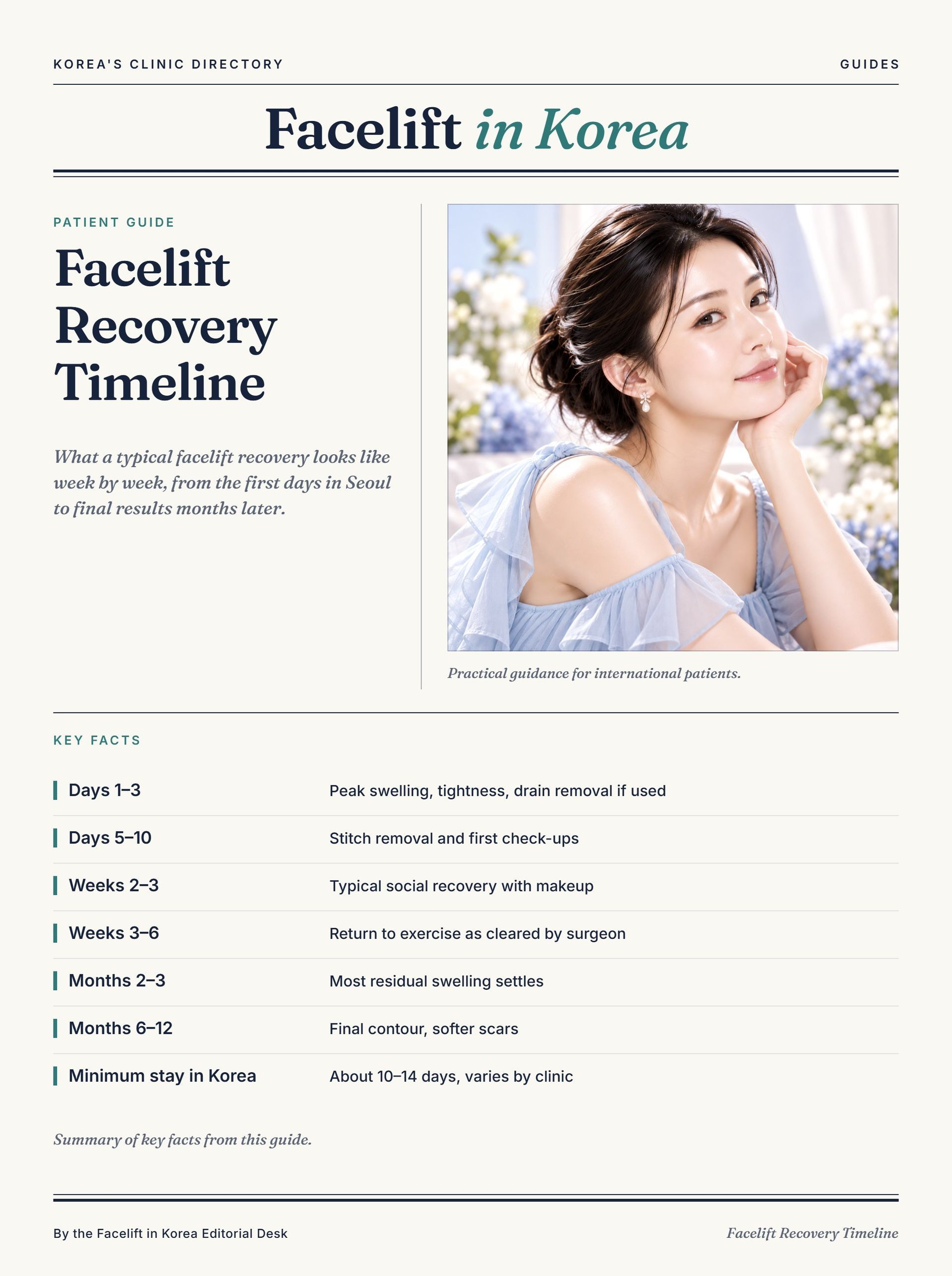
Key facts
| Days 1–3 | Peak swelling, tightness, drain removal if used |
|---|---|
| Days 5–10 | Stitch removal and first check-ups |
| Weeks 2–3 | Typical social recovery with makeup |
| Weeks 3–6 | Return to exercise as cleared by surgeon |
| Months 2–3 | Most residual swelling settles |
| Months 6–12 | Final contour, softer scars |
| Minimum stay in Korea | About 10–14 days, varies by clinic |
Read next
Reader questions
Frequently asked questions
How long does facelift recovery take?
Most people are socially presentable after 2–3 weeks. Swelling usually settles over 2–3 months, and final results show at around 6–12 months.
When can I return to work after a facelift?
Many patients return to desk work after about 2–3 weeks. Physically demanding jobs may need longer, as advised by your surgeon.
When can I exercise after a facelift?
Light walking is encouraged from the first days. Most surgeons allow gradual return to exercise after 3–6 weeks.
Why does my face feel numb after a facelift?
Small sensory nerves in the skin are disturbed when the skin is lifted. Numbness usually improves gradually over several months.
Is the recovery different for a deep plane facelift?
Swelling patterns can differ by technique and by what is combined with it. Your surgeon can give a timeline specific to your plan.
Next steps
Planning a facelift in Korea?
Compare clinics, check surgeon credentials and estimate your full trip budget before you book a consultation.
Facelift in Korea is an independent information directory. We do not perform procedures, and listings are not endorsements. This page is general information, not medical advice.