


Home › Patient Guides › Hematoma After Facelift
Patient Guides
Hematoma After Facelift: Signs, Causes and Treatment
By the Facelift in Korea Editorial Desk · Independent · How we report
The short answer
Quick answer: A hematoma is a collection of blood under the skin and the most common significant early complication after a facelift. It usually appears within 24–48 hours as rapidly increasing, tense, painful swelling, often on one side. A large hematoma needs prompt drainage by the surgeon. Good blood pressure control, avoiding blood thinners and strict rest lower the risk.
What is a hematoma after a facelift?
During a facelift, the surgeon lifts skin and deeper tissues away from the underlying structures. This creates space where blood can collect if a small vessel starts bleeding after surgery. That collection is called a hematoma. It is the most common significant early complication of facelift surgery. Medical literature reports a range of rates depending on the patient group and technique, and rates are generally higher in men than in women.
Small, minor collections are different from the normal swelling and bruising that every patient has. A true expanding hematoma is a surgical issue that needs prompt attention.
What are the warning signs?
- Swelling that increases quickly rather than slowly, often on one side of the face or neck.
- Tight, firm or tense skin that feels very different from the other side.
- Pain that is getting worse instead of better, especially if it is one-sided.
- Dark purple discoloration that spreads quickly.
- Difficulty swallowing or breathing in neck hematomas, which is an emergency.
- Fresh bleeding through dressings or from a drain.
Most expanding hematomas appear within the first 24 to 48 hours, often during the first night. This is one reason many Seoul clinics keep facelift patients overnight for monitoring. Compare these signs with normal recovery in swelling and bruising after a facelift.
What causes a hematoma?
- Blood pressure spikes: the most important factor. Pain, anxiety, nausea, vomiting, coughing and straining can all raise blood pressure.
- Blood-thinning medicines and supplements: aspirin, ibuprofen, some prescription drugs, fish oil, vitamin E, ginkgo and others. See medications to stop before a facelift.
- Male sex: the beard area has a richer blood supply; see facelift guide for men.
- Activity too soon: bending, lifting or exercise in the first days.
- Alcohol and some bleeding disorders.
How is a hematoma treated?
Treatment depends on size and speed. A small, stable collection may be watched, or drained with a needle in the clinic after it liquefies. An expanding hematoma usually needs the surgeon to open part of the incision, remove the clot, find and control the bleeding, and close again, often in the operating room. When treated promptly, most patients go on to a good final result. If a large hematoma is left too long, it can damage the overlying skin and increase the risk of skin loss, infection, lumpiness and prolonged swelling. See facelift risks and complications for the wider picture.
What should international patients in Seoul do?
Being near your surgeon in the first days is your best protection. Keep the clinic's 24-hour number saved and know exactly who to call at night, in which language. If you cannot reach the clinic and symptoms are severe, call 119 for an ambulance. Korea's emergency services can arrange interpretation, and the 1330 travel hotline can help with language.
- Stay close to the clinic for at least the first week; read how long to stay in Korea after a facelift.
- Have a companion with you for the first night or two, who knows the warning signs.
- Bring your blood pressure medicine and tell the clinic about every medicine and supplement you take.
- Avoid alcohol and late nights out during recovery, even if you feel well.
How can I lower my risk?
- Get high blood pressure well controlled before surgery.
- Stop blood thinners and supplements only as your surgeon and prescribing doctor advise.
- Keep your head elevated, rest and avoid straining, bending and lifting.
- Take anti-nausea and pain medicine as prescribed to avoid spikes.
- Wear your compression garment as instructed.
Can a hematoma happen after I fly home?
Late hematomas, appearing a week or more after surgery, are uncommon but possible, often after a sudden rise in blood pressure from exercise, heavy lifting, alcohol or a hard coughing fit. Keep activity gentle for the period your surgeon advises, even once you feel well. If you notice new one-sided swelling and pain at home, contact your clinic and seek local medical care promptly. Bring your operation summary so local doctors understand what was done.
The medical term and anatomy are also explained in our glossary entry on hematoma.
This page is general information, not medical advice. Decisions about surgery should be made with a qualified, board-certified plastic surgeon after an in-person examination.
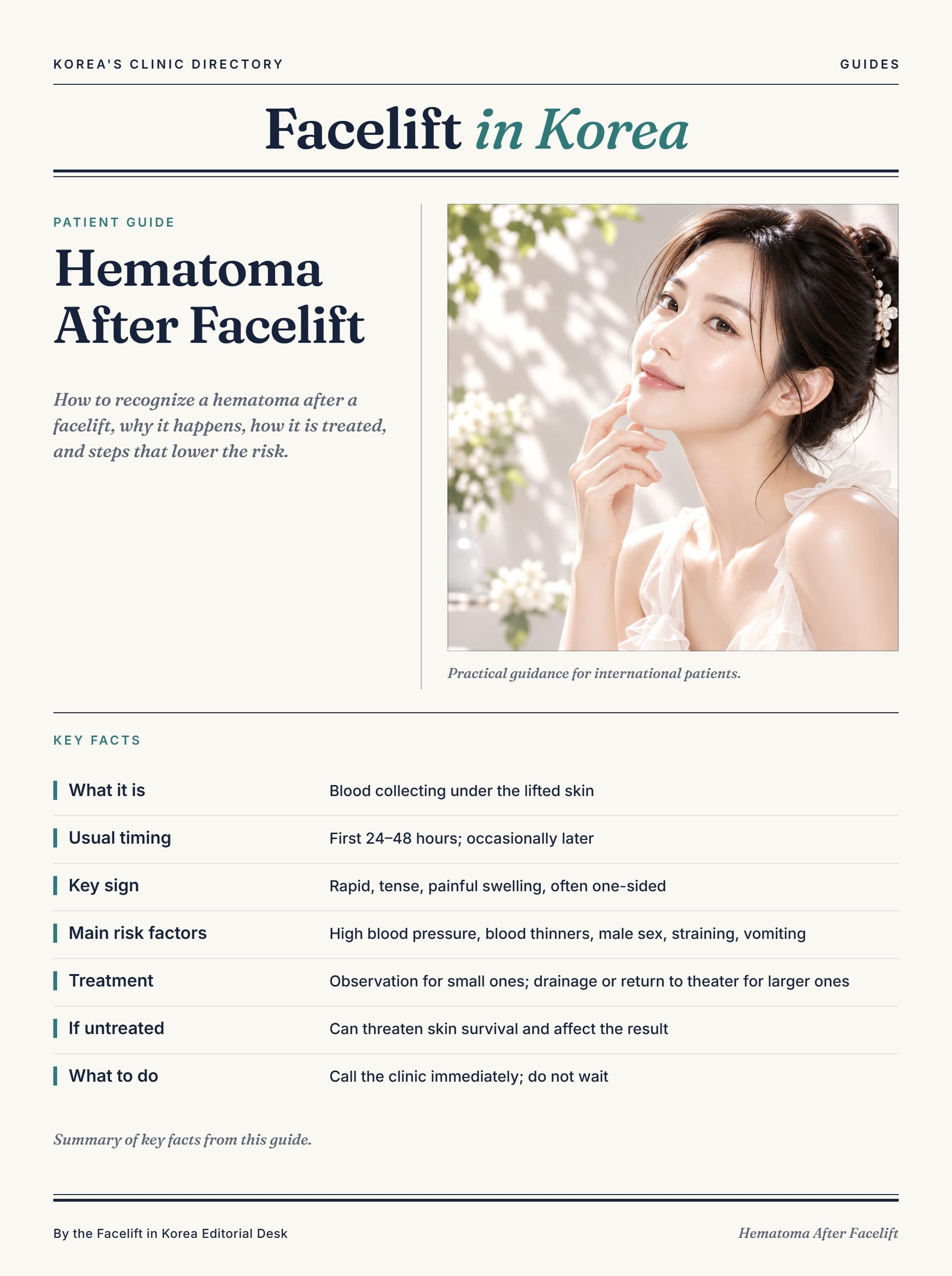
Key facts
| What it is | Blood collecting under the lifted skin |
|---|---|
| Usual timing | First 24–48 hours; occasionally later |
| Key sign | Rapid, tense, painful swelling, often one-sided |
| Main risk factors | High blood pressure, blood thinners, male sex, straining, vomiting |
| Treatment | Observation for small ones; drainage or return to theater for larger ones |
| If untreated | Can threaten skin survival and affect the result |
| What to do | Call the clinic immediately; do not wait |
Read next
Reader questions
Frequently asked questions
How do I know if I have a hematoma after a facelift?
Watch for rapidly increasing, tense and painful swelling, usually on one side, within the first 48 hours. Call your surgeon immediately if you notice this.
When does a hematoma usually happen after a facelift?
Most happen within the first 24–48 hours, often the first night. Later hematomas are less common but possible.
Will a hematoma ruin my facelift result?
When treated promptly, most patients still achieve a good result. Delay increases the risk of skin damage and prolonged swelling.
Are men more likely to get a hematoma?
Yes. Studies consistently report higher hematoma rates in men, partly due to the rich blood supply of the beard area.
Can I prevent a hematoma?
You can lower the risk by controlling blood pressure, avoiding blood-thinning medicines and supplements as advised, resting and avoiding straining.
Next steps
Planning a facelift in Korea?
Compare clinics, check surgeon credentials and estimate your full trip budget before you book a consultation.
Facelift in Korea is an independent information directory. We do not perform procedures, and listings are not endorsements. This page is general information, not medical advice.