


Home › Patient Guides › Facelift Recovery Day by Day
Patient Guides
Facelift Recovery Day by Day: The First 14 Days in Seoul
By the Facelift in Korea Editorial Desk · Independent · How we report
The short answer
Quick answer: Day 1 brings tightness and swelling under a compression wrap. Days 2–3 are usually the most swollen, with drains removed if used. By days 5–7 many front-of-ear stitches come out and bruising begins to fade. By days 10–14 most stitches are out, you can walk around comfortably, and many surgeons clear you to fly home.
What happens on surgery day?
You will usually be asked to arrive fasting. After final markings and a talk with the anesthesiologist, the operation typically takes several hours depending on the technique and any combined procedures. Many Seoul clinics keep facelift patients overnight in a recovery room or partner hospital ward for monitoring. You wake up with a head wrap or compression garment, and your face feels tight and full. Our page on facelift anesthesia options explains what to expect from sedation and general anesthesia.
Days 1–2: the first check-up
The clinic will usually see you the next day to remove the bulky dressing, check both sides for bleeding and, if used, remove drains. Expect stiffness when turning your head and swelling that may close the eyes slightly. Keep your head elevated, walk gently around your room every few hours, and take medicine exactly as prescribed.
- Eat soft foods that need little chewing.
- Avoid bending, lifting and hot showers.
- Wear the compression garment as instructed; see compression garment after facelift.
Day 3: peak swelling
For many people this is the most swollen day. Bruises may move down toward the neck and chest because of gravity. This looks alarming but is common. What is not normal is one side suddenly becoming much larger, tense and painful. That can signal a hematoma and needs an urgent call to the clinic.
Days 4–7: turning the corner
Swelling starts to ease and you feel more like yourself. Many clinics remove the stitches in front of the ears around day five to seven. Some allow gentle hair washing after this visit. Short walks outside are often encouraged. In Gangnam, many patients walk to nearby cafes wearing a hat and mask, which is a common sight in the area. For ideas on where to stay, see recovery stays in Gangnam.
Days 8–10: stitches and staples out
Stitches or staples in the scalp and behind the ears are typically removed around this time. You may notice tightness behind the ears and numbness in the cheeks and earlobes. Both usually improve over weeks to months. Bruising often turns yellow-green and is easier to cover with makeup.
Days 11–14: preparing to fly home
If healing is on track, most surgeons do a final review and give clearance to fly. They may provide a written summary, medicines for the journey and instructions for the coming weeks. Ask for copies of your operation note and a direct contact for follow-up. The flying after a facelift guide covers comfort and safety on long flights.
What should international patients plan for in Seoul?
- Transport: taxis are easy to use for short trips to the clinic. Keep the clinic address written in Korean on your phone.
- Help: it is wise to have a companion for at least the first two or three days.
- Supplies: pack a front-opening top, a soft scarf, lip balm and a travel pillow. Our list of what to pack for a facelift trip has more.
- Communication: confirm how to reach the clinic out of hours, and in which language.
How will I feel emotionally during the first two weeks?
Many patients feel a mix of relief and impatience. Around days four to eight, it is common to feel tired or low, especially when you are far from home and still swollen. Jet lag, broken sleep and pain medicine can add to this. It helps to plan simple, pleasant activities, keep in touch with family by video call, and remember that early swelling hides the final shape. If you feel very anxious or something does not look right, ask the clinic for a review. A good clinic will welcome the question rather than dismiss it.
What comes after the first two weeks?
Recovery continues at home. Swelling fades over the following months, scars soften and sensation returns gradually. Keep in touch with your clinic by sending photos at agreed points and see a local doctor if anything worries you. The broader facelift recovery timeline explains the months ahead.
This page is general information, not medical advice. Decisions about surgery should be made with a qualified, board-certified plastic surgeon after an in-person examination.
Key facts
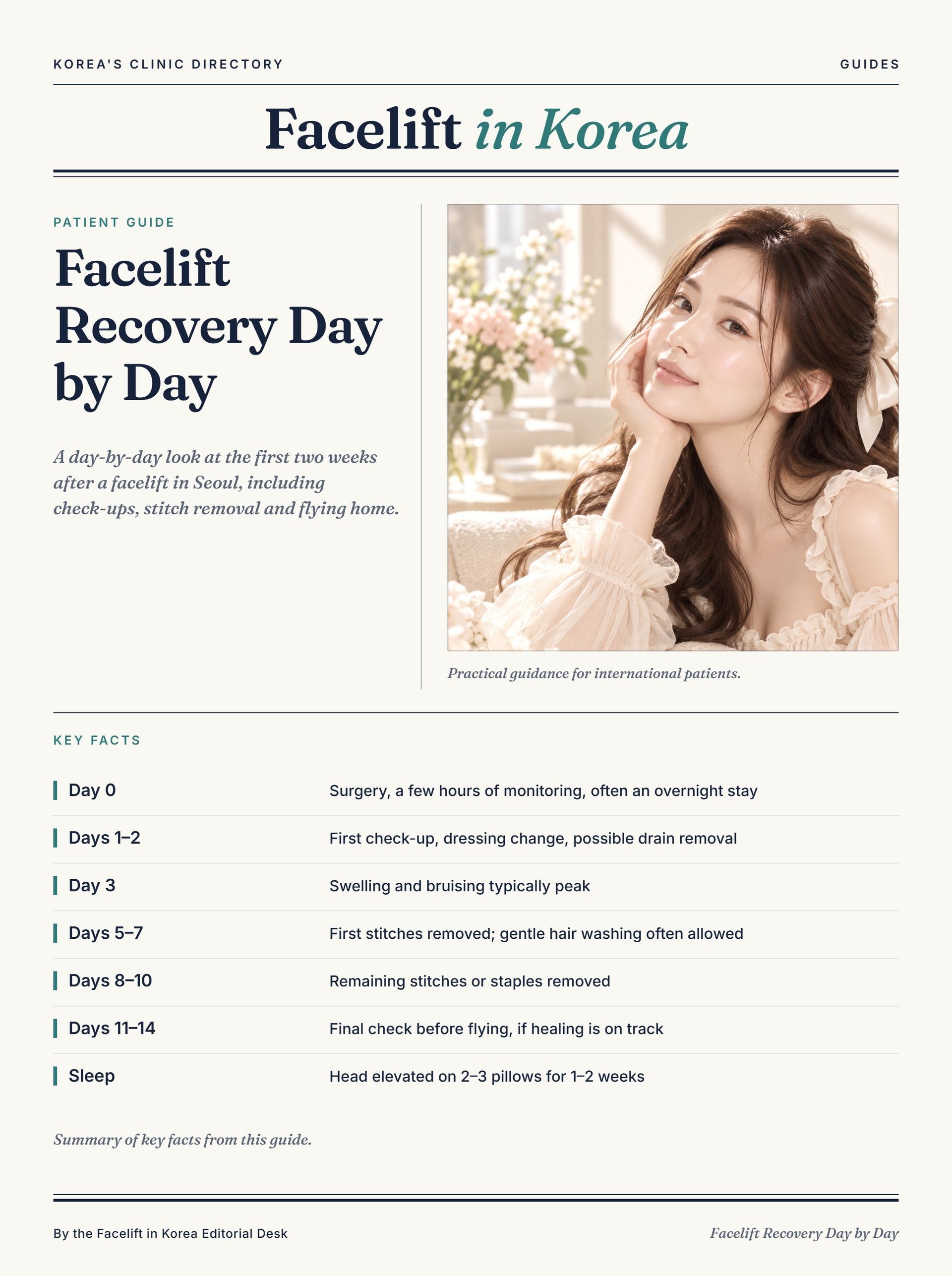
| Day 0 | Surgery, a few hours of monitoring, often an overnight stay |
|---|---|
| Days 1–2 | First check-up, dressing change, possible drain removal |
| Day 3 | Swelling and bruising typically peak |
| Days 5–7 | First stitches removed; gentle hair washing often allowed |
| Days 8–10 | Remaining stitches or staples removed |
| Days 11–14 | Final check before flying, if healing is on track |
| Sleep | Head elevated on 2–3 pillows for 1–2 weeks |
Read next
Reader questions
Frequently asked questions
Will I stay in the hospital after a facelift in Seoul?
Many Seoul clinics keep facelift patients overnight for monitoring, especially after general anesthesia. Some allow discharge the same day to a nearby hotel with a companion.
When can I wash my hair after a facelift?
Many surgeons allow gentle hair washing after about 2–5 days or after the first stitches are removed. Follow your own surgeon's timing.
How painful is the first week?
Most patients describe tightness and moderate discomfort rather than sharp pain. Prescribed medicine usually keeps it manageable.
Can I go sightseeing during recovery?
Short, gentle walks are usually encouraged after the first few days. Avoid crowded, hot or strenuous outings until your surgeon clears you.
When should I call the clinic urgently?
Call immediately for sudden one-sided swelling, severe pain, breathing difficulty, fever or new facial weakness.
Next steps
Planning a facelift in Korea?
Compare clinics, check surgeon credentials and estimate your full trip budget before you book a consultation.
Facelift in Korea is an independent information directory. We do not perform procedures, and listings are not endorsements. This page is general information, not medical advice.