


Home › Patient Guides › Facelift Scar Care
Patient Guides
Facelift Scar Care: How to Help Your Scars Heal Well
By the Facelift in Korea Editorial Desk · Independent · How we report
The short answer
Quick answer: Facelift scars usually sit in front of and behind the ear and into the hairline. They are pink for the first months and typically fade and flatten over 6–12 months. Good care means keeping incisions clean, avoiding tension and sun, starting silicone gel or sheets once healed, and asking your surgeon about laser or injection treatments if scars thicken.

Where are facelift scars?
Most facelift incisions follow natural creases and the hairline to hide scars. A common pattern starts in the temple hair or along the sideburn, runs down in front of the ear, sometimes tucks just inside the edge of the ear cartilage (a tragal incision), curves around the earlobe, and goes up behind the ear before entering the hair at the back. A neck lift may add a short incision under the chin. Shorter-scar techniques reduce the length but may not suit everyone. Our glossary explains the tragal incision.
How do facelift scars change over time?
- Weeks 1–2: incisions are closed with stitches, staples or skin glue. Mild crusting is normal.
- Weeks 3–8: scars look pink or red and may feel firm or itchy. This is active healing.
- Months 3–6: color gradually fades and the scar softens.
- Months 6–12: most scars become pale, flat and hard to see, though some take longer.
Scar quality depends on surgical technique, especially closing the skin without tension, as well as genetics, skin type, smoking and aftercare.
How should I care for incisions in the first two weeks?
- Follow your clinic's instructions for cleaning and applying ointment.
- Do not pick at crusts or scratch stitches.
- Avoid hair dye, perms, styling heat and hairspray near incisions until your surgeon allows them.
- Keep your head elevated and avoid pulling on the ears when dressing.
- Do not smoke; nicotine reduces blood flow to healing skin. See smoking and facelift.
What helps scars heal better after that?
- Silicone gel or sheets: widely used and supported by clinical guidelines for scar management. Most surgeons suggest starting once the incision is fully closed, often two to three weeks after surgery, and using them daily for two to three months or longer.
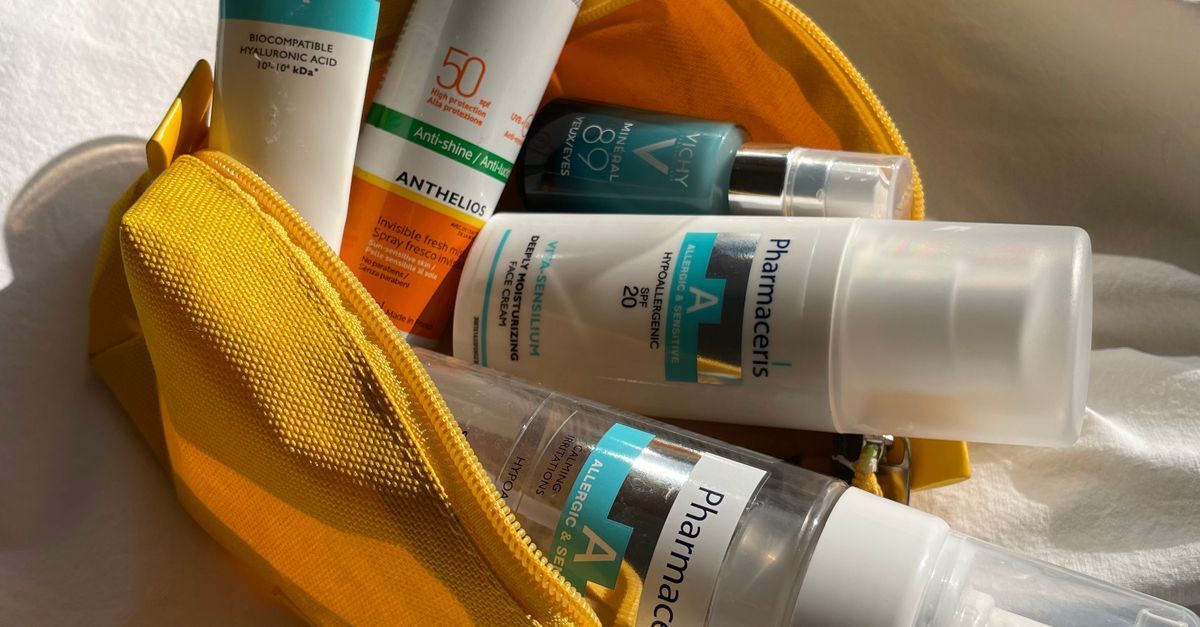
- Sun protection: UV light can darken new scars. Use a broad-spectrum sunscreen, hats and hair to cover scars for at least a year.
- Gentle massage: some surgeons recommend light scar massage after a few weeks. Ask first.
- Patience: avoid judging scars before six months.
Can I hide facelift scars while they heal?
Yes. Wearing your hair down covers most scars in front of and behind the ears. Once incisions are fully healed and your surgeon agrees, a light mineral concealer can blend redness. Men with short hair may notice scars behind the ear more, so ask your surgeon how incisions will be placed around the sideburn and hairline. Scarves and high collars help with neck incisions in the early weeks.
What if my scars become raised or wide?
Some people develop hypertrophic scars, which are raised and red but stay within the incision, or, rarely, keloids, which grow beyond it. Scars behind the ear are more prone to this. Treatments include steroid injections, silicone, pressure, laser therapy and, occasionally, scar revision surgery once the scar has matured. Earlobe distortion or a visible step at the hairline may also be corrected with minor revision. Discuss these possibilities before surgery; see facelift risks and complications.
What should international patients know about scar care in Korea?
Korean surgeons often pay close attention to incision placement and fine closure, partly because many local patients have skin that is more prone to visible or pigmented scars. Seoul also has a large dermatology sector, and many clinics offer laser scar treatments. If you are in Seoul long enough, some clinics start early scar treatments such as laser or LED before you fly home. Ask whether this is included or extra.
- Pack silicone gel and sunscreen for the flight home; Korean pharmacies stock many scar products.
- Ask for written scar-care instructions in English so your local doctor can continue them.
- If you have darker skin or a history of keloids, tell your surgeon early; read facelift scarring in Asian skin.
- Send scar photos at agreed points; see aftercare after returning home.
Scars are a trade-off for lasting lift. Non-surgical options avoid them but give smaller, shorter-lived results; compare them in facelift vs thread lift.
This page is general information, not medical advice. Decisions about surgery should be made with a qualified, board-certified plastic surgeon after an in-person examination.
Key facts
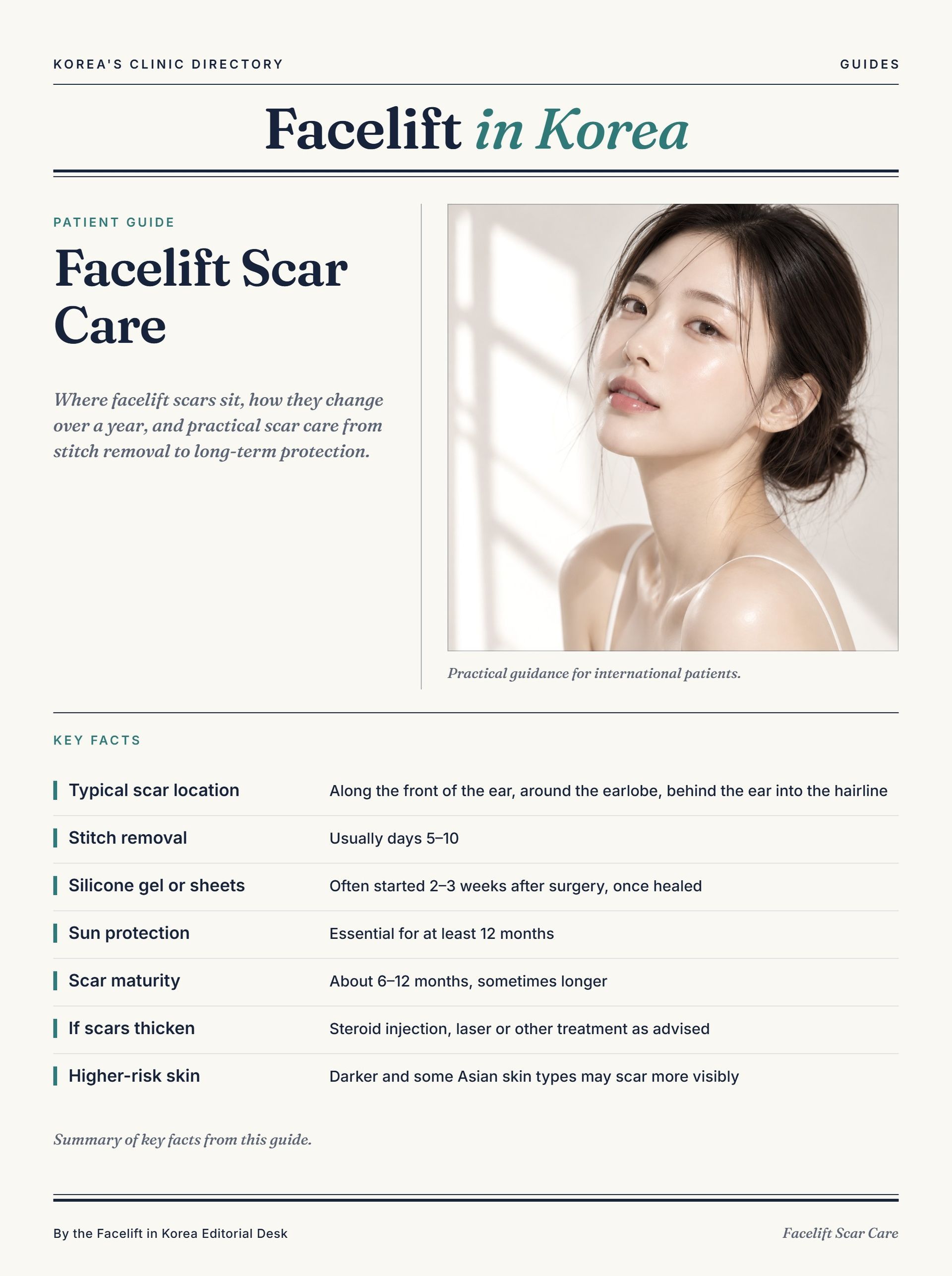
| Typical scar location | Along the front of the ear, around the earlobe, behind the ear into the hairline |
|---|---|
| Stitch removal | Usually days 5–10 |
| Silicone gel or sheets | Often started 2–3 weeks after surgery, once healed |
| Sun protection | Essential for at least 12 months |
| Scar maturity | About 6–12 months, sometimes longer |
| If scars thicken | Steroid injection, laser or other treatment as advised |
| Higher-risk skin | Darker and some Asian skin types may scar more visibly |
Read next
Reader questions
Frequently asked questions
Where are the scars after a facelift?
Usually in front of and behind the ear, around the earlobe and into the hairline. A small scar under the chin is added if the neck is treated.
How long do facelift scars take to fade?
They typically fade and flatten over 6–12 months, sometimes longer, depending on skin type and care.
When can I start silicone gel after a facelift?
Many surgeons recommend starting once incisions are fully closed, often about two to three weeks after surgery. Follow your surgeon's timing.
Can facelift scars be treated if they are noticeable?
Yes. Options include silicone, steroid injections, laser treatments and, after the scar matures, minor surgical revision.
Do Asian patients scar more after a facelift?
Some Asian and darker skin types are more prone to thickened or pigmented scars. Careful technique and aftercare help.
Next steps
Planning a facelift in Korea?
Compare clinics, check surgeon credentials and estimate your full trip budget before you book a consultation.
Facelift in Korea is an independent information directory. We do not perform procedures, and listings are not endorsements. This page is general information, not medical advice.