


Home › Patient Guides › Flying Home After a Facelift
Patient Guides
Flying Home After a Facelift in Korea: Timing and Safety Tips
By the Facelift in Korea Editorial Desk · Independent · How we report
The short answer
Quick answer: Many surgeons advise waiting at least 7 days after a facelift before flying, and many Korean clinics prefer 10 to 14 days so stitches can be removed and early problems ruled out. Long-haul flights add blood clot risk. Get clearance from your surgeon, keep moving and hydrated on board, and ask about compression stockings.
How soon can you fly after a facelift?
There is no fixed rule. Many surgeons say the earliest reasonable time is about one week after surgery. Many clinics in Seoul prefer that international patients stay 10 to 14 days. By then stitches are usually out, the surgeon has checked healing and the highest-risk window for some complications has passed.
Your surgeon will look at your procedure, your health and your flight length. A short flight to a nearby country is different from a 14-hour flight to North America or Europe. If you also had eyelid, neck or fat-grafting work, the advice may change. Our guide on how long to stay in Korea after a facelift explains how clinics plan the stay.
Why does flying soon after surgery carry extra risk?
Surgeons usually mention three concerns:
- Blood clots. Surgery, anesthesia and sitting still for many hours each raise the risk of deep vein thrombosis (DVT). A clot in the leg can travel to the lungs, which is an emergency.
- Swelling. Cabin pressure changes and long periods sitting can make facial swelling worse for a while. This is usually temporary but can be uncomfortable.
- Distance from your surgeon. If a hematoma or infection develops on the plane or soon after landing, your operating team is far away.
What should you do before booking your flight home?
- Ask your surgeon for the earliest and the ideal departure date before you book. Choose a flexible or changeable ticket.
- Tell your surgeon about any history of clots, hormone therapy, birth control pills, recent long travel or heart and lung conditions.
- Plan the final check-up two or more days before departure, not on the morning of the flight.
- Ask whether you should wear graduated compression stockings on the flight, and whether you need any other clot prevention.
What should you carry on the plane?
- All prescribed medicines in original packaging, plus a written list in English.
- A short medical summary: procedure, date, surgeon name, medicines given and clinic contact details.
- Wound-care supplies, cotton swabs, saline or ointment, and your compression garment.
- A travel pillow to keep your head supported and raised, and a scarf or hat if you want privacy.
- A refillable water bottle, filled after security.
Our facelift trip packing list covers the full trip.
How can you stay comfortable and safer on board?
- Choose an aisle seat so you can get up easily. Walk the aisle every hour or two when it is safe.
- Do ankle circles and calf raises while seated.
- Drink water regularly. Limit alcohol and caffeine, which can dehydrate you and may interact with medicines.
- Keep your head raised. Avoid sleeping face-down on the tray table.
- Avoid lifting heavy bags into the overhead bin. Ask crew or a companion for help.
What do international patients in Korea need to know?
Most long-haul flights from Korea leave from Incheon International Airport, which is roughly an hour or more by road or airport train from Gangnam. Allow time for the transfer, check-in and long walks inside the terminal. Our page on Incheon Airport has transport tips.
Ask the clinic for a fit-to-fly letter in English. Most airlines do not require one for facial surgery, but it can help if crew have questions. Some clinics give patients a small kit of dressings and medicines for the trip.
If you claim a tax refund for cosmetic surgery, allow extra time at the airport. See VAT refunds on cosmetic surgery.
What symptoms need urgent help during or after the flight?
Seek medical help right away for chest pain, shortness of breath, coughing blood, or a swollen, painful calf. These can be signs of a clot. Also seek help for sudden, painful swelling on one side of the face or neck, or trouble breathing or swallowing. Tell cabin crew if it happens in the air. After landing, contact a local doctor or emergency service and then your Korean clinic. The handover is covered in aftercare after returning home.
This page is general information, not medical advice. Decisions about surgery should be made with a qualified, board-certified plastic surgeon after an in-person examination.
Key facts
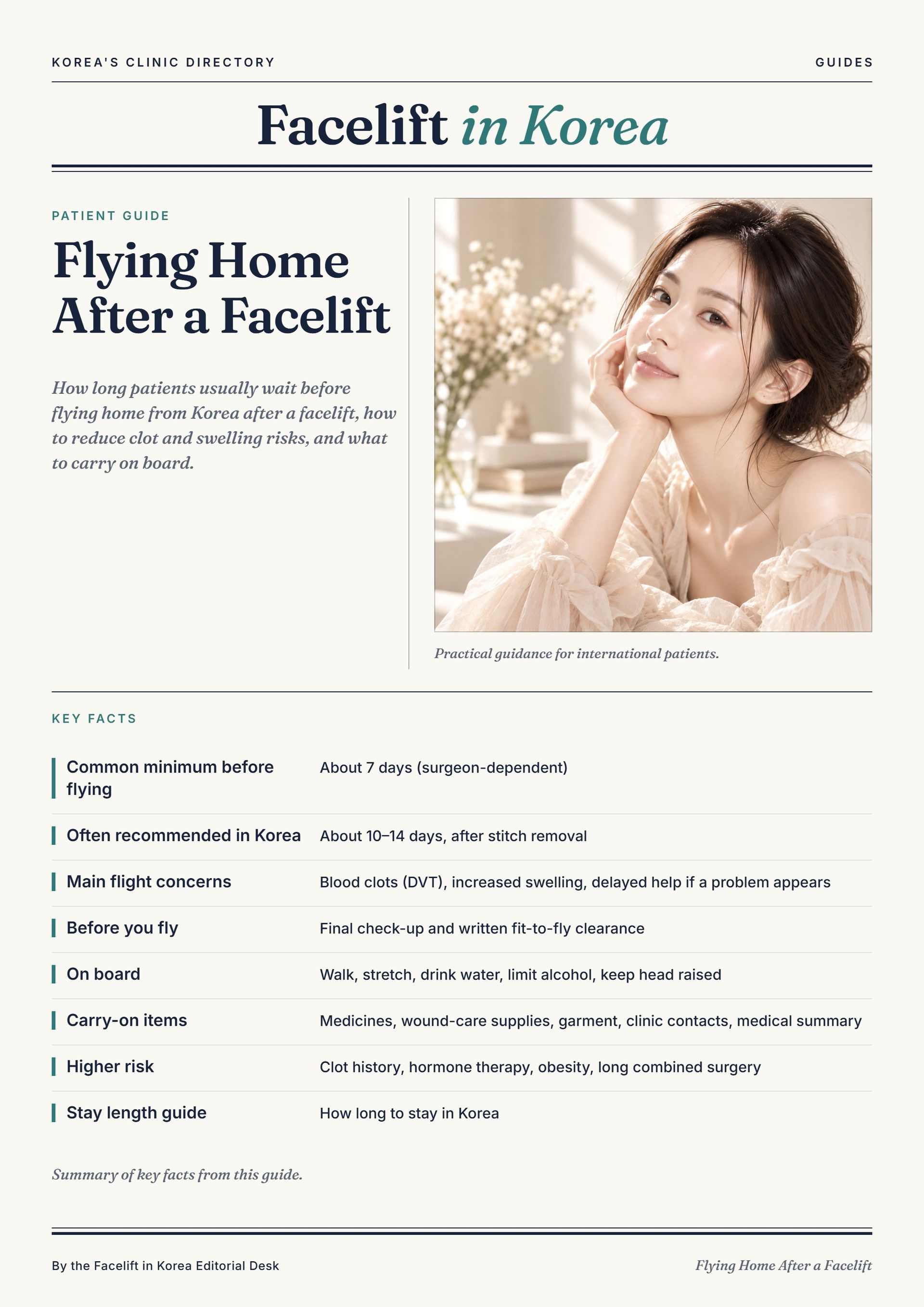
| Common minimum before flying | About 7 days (surgeon-dependent) |
|---|---|
| Often recommended in Korea | About 10–14 days, after stitch removal |
| Main flight concerns | Blood clots (DVT), increased swelling, delayed help if a problem appears |
| Before you fly | Final check-up and written fit-to-fly clearance |
| On board | Walk, stretch, drink water, limit alcohol, keep head raised |
| Carry-on items | Medicines, wound-care supplies, garment, clinic contacts, medical summary |
| Higher risk | Clot history, hormone therapy, obesity, long combined surgery |
| Stay length guide | How long to stay in Korea |
Read next
Reader questions
Frequently asked questions
Can I fly 5 days after a facelift?
Some surgeons permit it for short flights in low-risk patients, but many prefer at least 7 days and often 10 to 14 days for long-haul travel. Only your surgeon can clear you after examining you.
Does flying make facial swelling worse after a facelift?
Long periods sitting and cabin pressure changes can make swelling temporarily worse. Keeping your head raised, drinking water and moving around usually help, and the extra swelling normally settles within days.
Should I wear compression stockings when flying after surgery?
Many surgeons recommend graduated compression stockings for long flights after surgery to help reduce clot risk. Ask your surgeon whether you need them and what size and pressure to buy.
Do I need a fit-to-fly certificate after cosmetic surgery?
Most airlines do not require one for facial surgery, but policies vary. A short letter in English from your clinic is easy to get and useful to carry.
What if I develop a problem after flying home?
For urgent symptoms, go to a local emergency service first. Then contact your Korean clinic with photos and your medical summary so they can advise your local doctor.
Next steps
Planning a facelift in Korea?
Compare clinics, check surgeon credentials and estimate your full trip budget before you book a consultation.
Facelift in Korea is an independent information directory. We do not perform procedures, and listings are not endorsements. This page is general information, not medical advice.