


Home › Patient Guides › Compression Garments After Facelift
Patient Guides
Compression Garments After a Facelift in Korea: How Long and How to Wear Them
By the Facelift in Korea Editorial Desk · Independent · How we report
The short answer
Quick answer: Most Korean clinics fit a chin-and-neck compression garment right after a facelift. A common pattern is near-constant wear for the first several days, then mainly at night for one to three more weeks. Schedules vary by technique and surgeon. Wear it exactly as instructed, and report tightness, pain or skin marks that do not fade.
What is a facelift compression garment?
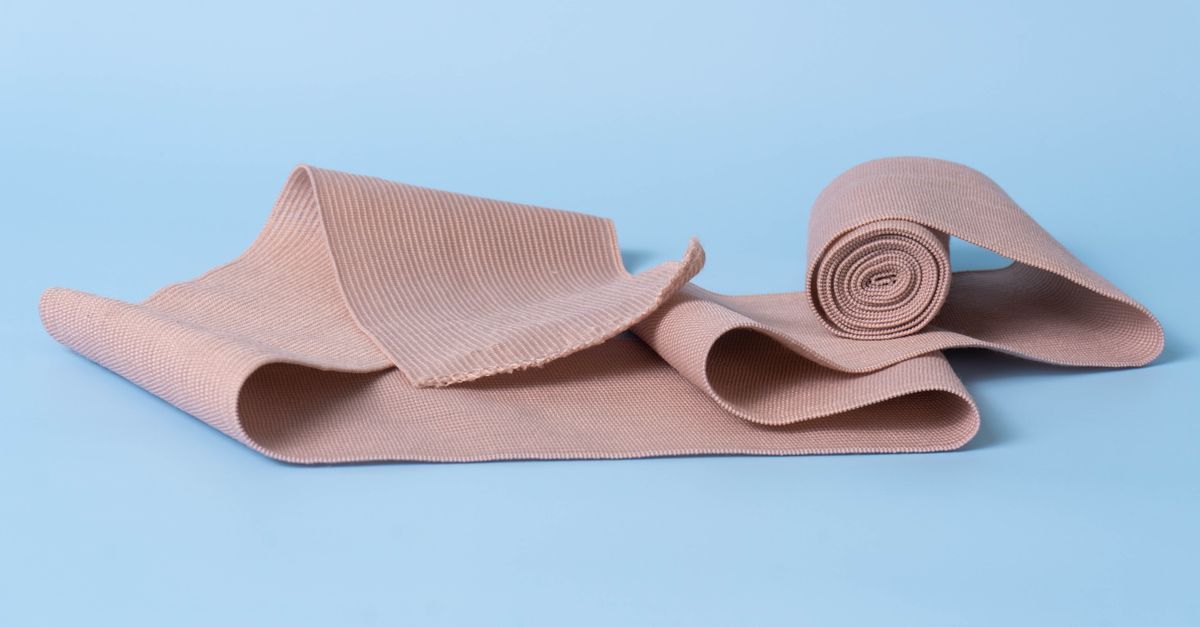
A facelift compression garment is a soft, elastic wrap. It usually cups the chin, runs along the jaw and fastens over the top of the head with Velcro. Some designs also cover the neck and the area in front of the ears. After surgery it holds a light, even pressure on the treated tissue.
Clinics in Seoul usually put the first garment on in the operating room or recovery area, often over dressings. Many clinics give patients a second garment so one can be washed. Some patients also have small drains for the first day or two. In that case the garment is placed so the tubes are not kinked.
Why do surgeons ask you to wear one?
Surgeons generally describe compression as a support measure, not a treatment that changes your result. The usual aims are:
- To give comfort and a sense of support when you move your head.
- To help limit fluid build-up and early swelling and bruising.
- To keep dressings in place during the first days.
- To remind you not to bend, strain or turn your neck sharply.
A garment does not prevent every complication. It cannot stop a significant bleed. You still need to watch for signs of a hematoma, which needs urgent review.
How long do you need to wear it?
There is no single standard. The schedule depends on the technique, how much neck work was done and your surgeon's preference. A typical pattern looks like this:
- Days 1–3: worn almost all the time, removed only when the nurse checks your face or changes dressings.
- Days 4–7: still worn most of the day and night. Some surgeons allow short breaks for washing.
- Weeks 2–3 (sometimes 4): often worn at night only, or at home in the evening.
Patients who had a neck lift or liposuction may be asked to wear it longer. A patient who had a limited procedure may be asked to wear it for a shorter time. Never stop early, or start wearing it longer or tighter, without asking your surgeon. You can see where compression fits into the wider plan in our facelift recovery timeline.
How should it fit?
It should feel snug but not painful. A simple test is that you can slide one or two fingers under the strap. Tell the clinic if you notice any of the following:
- Pain that increases instead of easing.
- Deep red lines or blisters that do not fade within about an hour of removal.
- Skin that looks pale, dusky or feels numb in a new area.
- Swelling that is clearly greater on one side.
- Any difficulty swallowing or breathing.
Do not cut, fold or re-shape the garment. Do not add extra wraps. Too much pressure can reduce blood flow to the healing skin flaps.
How do you care for your skin under the garment?
Skin under elastic can get warm and itchy. Follow your clinic's wound-care sheet. General habits that clinics often recommend include:
- Wash the garment by hand in mild soap and let it air dry. Use the spare while one dries.
- Keep incisions dry and covered as instructed. Do not put creams under the garment unless they were prescribed.
- Keep hair tied back so it does not get trapped in the Velcro or rub the incisions.
- Check behind the ears in a mirror once a day, as this area is easy to miss.
What should international patients in Korea know?
In Seoul, most facelift patients come back to the clinic one to three days after surgery, and again at about one week for stitch checks. The nurse will usually adjust the garment, change dressings and tell you when to switch to night-only use. Bring the garment to every visit.
Ask for written instructions in English before you leave the clinic. Ask how many hours per day to wear it, when to move to night-only wear and when to stop. If an interpreter helps you, confirm the plan in writing as well. See our guide to medical interpreters in Korea.
Seoul summers are hot and humid. Wearing a garment from June to August can be uncomfortable. If you can choose your dates, our page on the best time of year for a facelift in Korea covers seasonal factors.
Many patients fly home while still in the night-only phase. Pack the garment in your carry-on, not your checked bag. Ask your surgeon whether to wear it on the plane. Practical travel points are covered in flying home after a facelift.
Can you buy a replacement?
If a garment stretches out or is lost, ask the clinic first. Garments come in different shapes and pressure levels. Your surgeon may want a specific style. Medical supply shops and pharmacies sell chin straps, but a generic product may fit differently. Check with the clinic before switching.
This page is general information, not medical advice. Decisions about surgery should be made with a qualified, board-certified plastic surgeon after an in-person examination.
Key facts
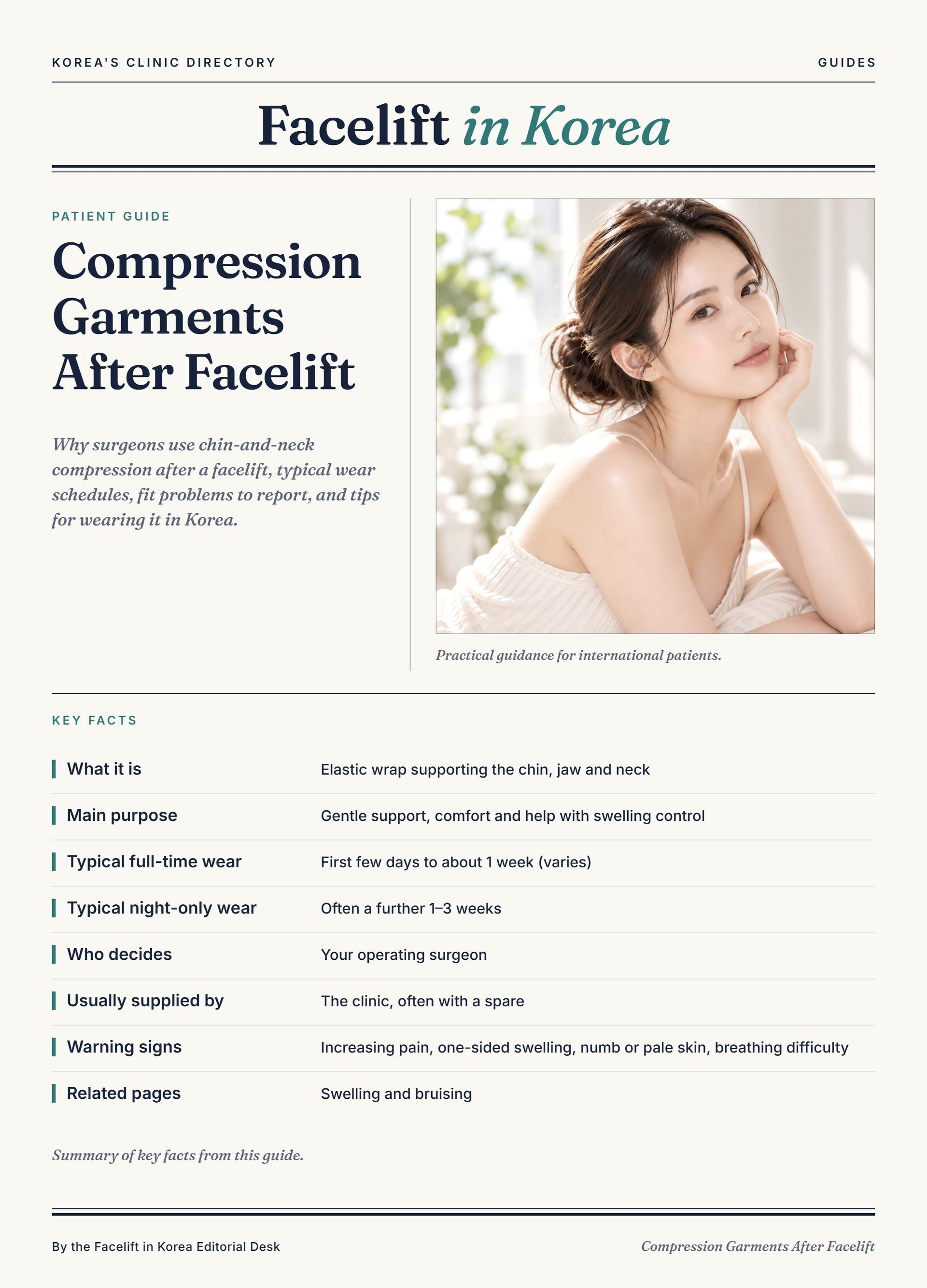
| What it is | Elastic wrap supporting the chin, jaw and neck |
|---|---|
| Main purpose | Gentle support, comfort and help with swelling control |
| Typical full-time wear | First few days to about 1 week (varies) |
| Typical night-only wear | Often a further 1–3 weeks |
| Who decides | Your operating surgeon |
| Usually supplied by | The clinic, often with a spare |
| Warning signs | Increasing pain, one-sided swelling, numb or pale skin, breathing difficulty |
| Related pages | Swelling and bruising |
Read next
Reader questions
Frequently asked questions
How long do I wear a compression garment after a facelift?
Many surgeons ask for near-constant wear for the first several days, then night-only wear for one to three more weeks. Your schedule depends on your procedure and your surgeon. Follow the written plan your clinic gives you.
Can I take off my facelift compression garment to sleep?
Usually not in the first week, because night is when many surgeons most want support in place. Later, some patients wear it only at night. Ask your surgeon before changing anything.
Is it bad if the garment feels too tight?
It should feel snug, not painful. Increasing pain, deep marks that do not fade, pale or numb skin, or uneven swelling should be reported to the clinic promptly.
Does wearing the garment longer give a better result?
There is no good evidence that wearing it longer than advised improves the final result. Extra pressure can sometimes harm healing skin. Wear it as instructed, not more and not less.
Should I wear my compression garment on the flight home from Korea?
Some surgeons recommend it for comfort and others do not require it. Ask at your last check-up and keep the garment in your carry-on bag either way.
Next steps
Planning a facelift in Korea?
Compare clinics, check surgeon credentials and estimate your full trip budget before you book a consultation.
Facelift in Korea is an independent information directory. We do not perform procedures, and listings are not endorsements. This page is general information, not medical advice.