


Home › Patient Guides › Smoking, Vaping and Facelift Safety
Patient Guides
Smoking, Vaping and Facelift Safety: What Patients in Korea Should Know
By the Facelift in Korea Editorial Desk · Independent · How we report

The short answer
Quick answer: Nicotine narrows blood vessels and reduces blood flow to the skin lifted during a facelift. Smokers have a higher risk of skin loss, poor healing and wider scars. Many surgeons ask patients to stop all nicotine, including vapes, patches and gum, for at least four weeks before and after surgery. Some will not operate on active smokers. Always tell your surgeon the truth.
Why is smoking such a concern for facelift surgery?
During a facelift, the surgeon lifts skin away from the deeper tissue and repositions it. The lifted skin depends on a reduced blood supply while it heals. Nicotine narrows small blood vessels. Carbon monoxide in smoke lowers the oxygen that blood can carry. Together these can starve healing skin.
Surgeons widely report that smokers have higher rates of:
- Skin necrosis (areas of skin that die and scab), often behind the ears.
- Slow wound healing and wound breakdown.
- Infection.
- Wider or more visible scars. See facelift scar care.
- Some surgeons also link smoking with a higher risk of hematoma and anesthesia-related breathing issues.
Do vaping, patches and heated tobacco count?
Yes, for most surgeons. The main problem for skin healing is nicotine, and e-cigarettes, nicotine pouches, patches, gum and heated tobacco products all deliver it. Some of these products avoid smoke and carbon monoxide, but nicotine still narrows blood vessels. Many surgeons ask you to stop all nicotine products, not just cigarettes. Ask yours directly rather than assuming a substitute is allowed.
Cannabis smoking also affects the lungs and anesthesia. Tell your anesthesia team if you use it.
How long before and after surgery should you stop?
There is no single rule. Common guidance from surgeons includes:
- Before surgery: stop all nicotine for at least three to four weeks. Some surgeons ask for six weeks or longer.
- After surgery: stay nicotine-free until wounds are fully healed, often at least four more weeks.
- Secondhand smoke: avoid smoky places during recovery.
Because the risks are linked to blood flow in the lifted skin, deeper or more extensive lifts may carry more risk for smokers. Some surgeons offer less extensive procedures to people who cannot stop. Others will not operate until the patient has quit. Our page on surgical vs non-surgical facelifts explains the alternatives, but it is not a substitute for that conversation.
Why should you be honest with your surgeon?
Hiding nicotine use puts your own skin at risk. It also means your surgeon cannot adjust the plan. Some surgeons in Korea and elsewhere use a urine or blood test for nicotine or cotinine before surgery. If you have smoked recently, say so. Your surgery can be moved. A wound complication cannot be undone so easily.
What should international patients in Korea know?
Korea has strict smoking bans in many indoor and public places, and smoking is restricted near many building entrances. Gangnam streets have designated smoking areas, so smoke drift is still possible. Choose accommodation that is fully non-smoking.
Online consultations with Seoul clinics usually include a health questionnaire. Answer the smoking and vaping questions fully. Ask the clinic what stop time they need before you book flights, because a later surgery date affects your whole trip. See booking a facelift in Korea step by step.
Long flights and travel stress can make it harder to stay off nicotine. Plan support before you leave home. Your family doctor can help with quitting aids that do not contain nicotine if your surgeon allows them.
How can you make quitting easier?
- Set a quit date well before your stop deadline.
- Talk to your doctor about quit-smoking programs and non-nicotine medicines, and check with your surgeon that they are safe before surgery.
- Remove cigarettes, vapes and lighters from your home and luggage.
- Tell a companion or friend so they can support you during recovery.
- Remember that the benefits go beyond surgery: quitting improves skin quality and health long term, and may help your result last. See how long facelift results last.
What signs of poor healing should you watch for?
Tell your clinic quickly if skin near the incisions becomes dark, purple, black or very pale, if wounds open, or if there is pus or a bad smell. Early care can limit damage. These signs need prompt review whether or not you smoke. More detail is in facelift risks and complications.
This page is general information, not medical advice. Decisions about surgery should be made with a qualified, board-certified plastic surgeon after an in-person examination.
Key facts
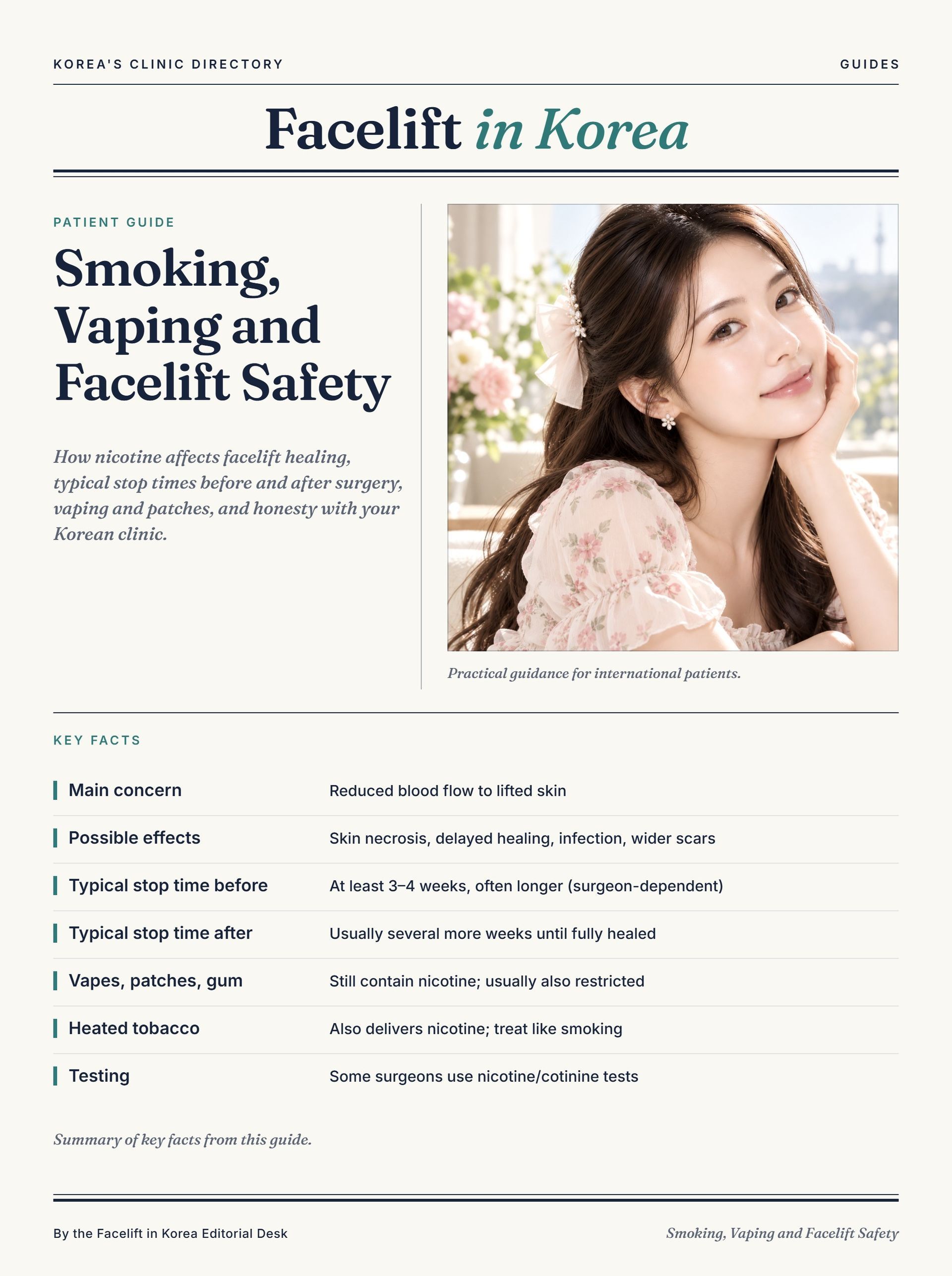
| Main concern | Reduced blood flow to lifted skin |
|---|---|
| Possible effects | Skin necrosis, delayed healing, infection, wider scars |
| Typical stop time before | At least 3–4 weeks, often longer (surgeon-dependent) |
| Typical stop time after | Usually several more weeks until fully healed |
| Vapes, patches, gum | Still contain nicotine; usually also restricted |
| Heated tobacco | Also delivers nicotine; treat like smoking |
| Testing | Some surgeons use nicotine/cotinine tests |
| Related | Risks and complications |
Read next
Reader questions
Frequently asked questions
How long before a facelift should I stop smoking?
Many surgeons ask for at least three to four weeks without any nicotine before surgery, and some ask for six weeks or longer. Your own surgeon will set the exact time.
Can I vape before a facelift?
Most surgeons treat vaping like smoking because e-cigarettes usually contain nicotine, which reduces blood flow to healing skin. Ask your surgeon, but expect to stop.
Are nicotine patches safe before facelift surgery?
Patches still deliver nicotine, so many surgeons ask you to avoid them in the weeks around surgery. Ask about non-nicotine quitting aids instead.
Will a Korean clinic test me for nicotine?
Some surgeons use urine or blood tests for nicotine or cotinine. Whether tested or not, always tell your surgeon the truth about recent use.
When can I smoke again after a facelift?
Most surgeons ask you to stay nicotine-free until your wounds are fully healed, often at least four weeks after surgery. Not restarting is best for your skin and health.
Next steps
Planning a facelift in Korea?
Compare clinics, check surgeon credentials and estimate your full trip budget before you book a consultation.
Facelift in Korea is an independent information directory. We do not perform procedures, and listings are not endorsements. This page is general information, not medical advice.