


Home › Patient Guides › Best Time of Year for a Facelift in Korea
Patient Guides
Best Time of Year for a Facelift in Korea
By the Facelift in Korea Editorial Desk · Independent · How we report
The short answer
Quick answer: Many international patients choose spring (April to early June) or autumn (late September to November) for a facelift in Korea. Mild, dry weather makes recovery walks comfortable and scarves easy to wear. Summer is hot and humid with a rainy season, and winter is cold and dry. Avoid major Korean holidays, when clinics close, and plan around your own work calendar.
Is there a best season for a facelift in Korea?
There is no medical rule that one season heals better than another. Your health, your surgeon and your aftercare matter far more. Still, the season affects how comfortable the trip feels. Seoul has four clear seasons, and the weather shapes your daily walks, what you wear to cover swelling, and how easy it is to protect healing skin.
Why do many patients choose spring and autumn?
From roughly April to early June, and from late September to November, Seoul is usually mild and relatively dry. These months are pleasant for gentle walks, which surgeons often encourage during recovery. It is easy to wear a light scarf or high collar to hide neck bruising, and you sweat less under compression garments. The downside is popularity: these months are also busy with tourists, so popular surgeons and recovery accommodation fill up earlier.
- Spring: cherry blossoms in early April attract crowds; fine dust (yellow dust) can affect air quality on some days.
- Autumn: often clear skies and comfortable temperatures; a favorite period for many patients.
Is summer a bad time for a facelift?
Not necessarily, but it is less comfortable. Seoul summers are hot and humid, and the rainy season (jangma) usually runs from late June through July. Heat can make swelling feel worse and makes compression garments sticky. Sun exposure is also stronger, so scar protection needs extra care. On the plus side, some patients find more appointment availability in mid-summer. If summer is your only option, choose air-conditioned accommodation close to the clinic and plan indoor rest. See swelling and bruising after a facelift for tips.
What about winter?
Winter in Seoul is cold and dry, often below freezing in January. Many patients like winter because hats, scarves and turtlenecks hide incisions and bruising naturally, and there is less sun on healing scars. It also fits year-end holidays in many countries. Dry air can make skin feel tight, so a good moisturizer and a humidifier in your room help. Icy sidewalks are a minor risk when you are tired after surgery, so take taxis for short trips.
Which Korean holidays should I avoid?
Two holidays matter most, and their dates change every year because they follow the lunar calendar:
- Lunar New Year (Seollal): usually in January or February, with about three days off.
- Chuseok (Korean harvest festival): usually in September or early October, also about three days.
Many clinics close or run reduced hours during these periods, and transport is busy. Avoid scheduling surgery just before them, because you want your surgeon available during the first week. Other public holidays usually close clinics for one day. Ask your clinic for its holiday calendar when you book.
How should international patients plan the timing?
Start with your own calendar. You need about two to three weeks in Korea and ideally another week or two before major social or work events. Many patients plan surgery so the final result is visible before a wedding, reunion or new job, allowing three to six months for swelling to settle fully. Read how long to stay in Korea after a facelift and the facelift recovery timeline when planning.
- Book consultations two to three months ahead for spring and autumn.
- Check entry rules for your travel dates. K-ETA rules for some nationalities may change from January 2027; see K-ETA for medical tourists.
- Consider flight prices, which rise during school holidays and Korean festivals.
- If you also want non-surgical treatments, ask whether to do them before or after surgery.
Does the season change the cost?
Surgical fees in Seoul do not usually change by season, although some clinics run promotions at quieter times. Flights and accommodation vary much more. Our facelift trip total budget page lists the costs to plan for. Be careful with seasonal discounts that pressure you to book quickly; see cheap facelift red flags.
This page is general information, not medical advice. Decisions about surgery should be made with a qualified, board-certified plastic surgeon after an in-person examination.
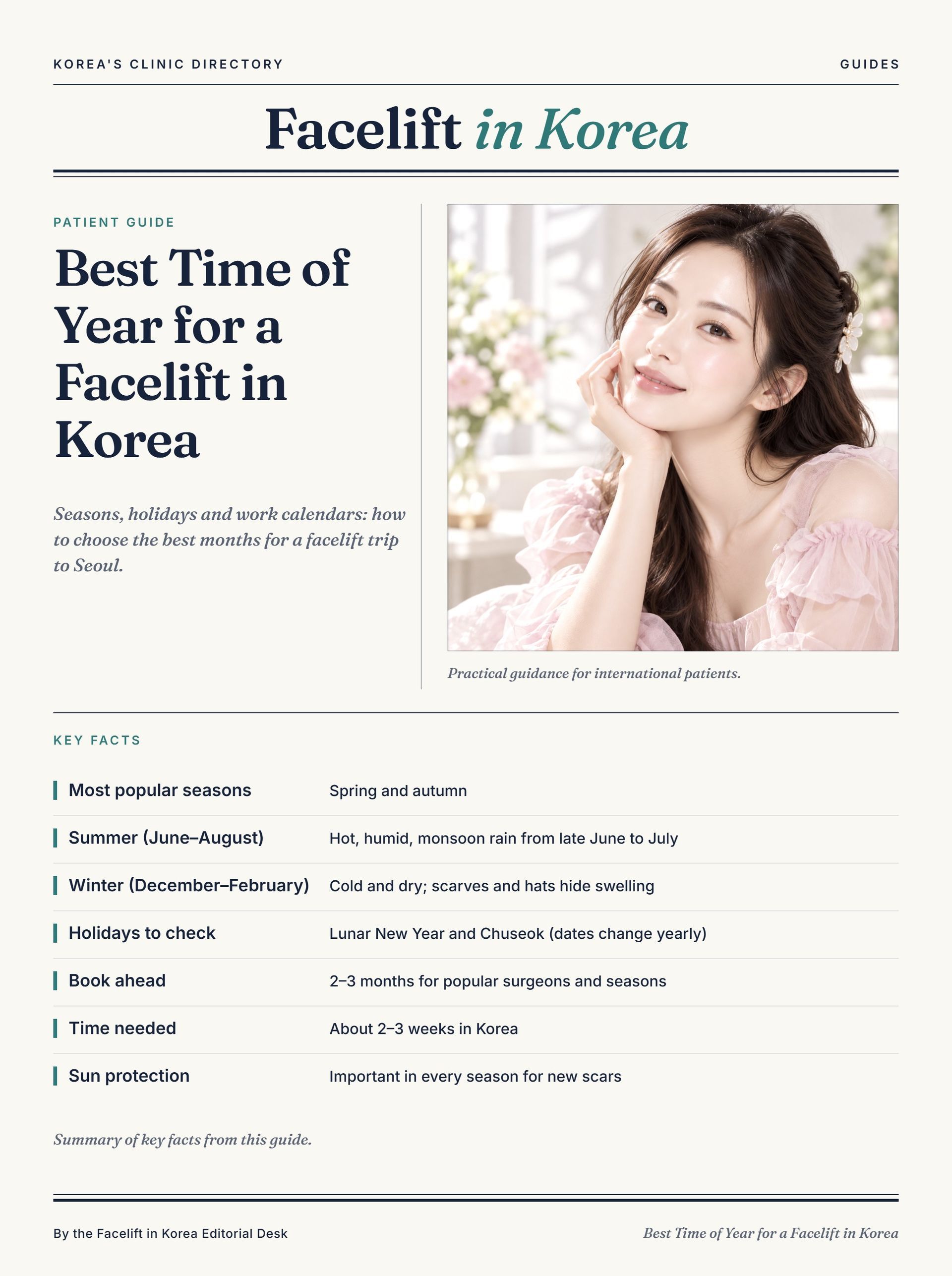
Key facts
| Most popular seasons | Spring and autumn |
|---|---|
| Summer (June–August) | Hot, humid, monsoon rain from late June to July |
| Winter (December–February) | Cold and dry; scarves and hats hide swelling |
| Holidays to check | Lunar New Year and Chuseok (dates change yearly) |
| Book ahead | 2–3 months for popular surgeons and seasons |
| Time needed | About 2–3 weeks in Korea |
| Sun protection | Important in every season for new scars |
Read next
Reader questions
Frequently asked questions
What is the best month for a facelift in Seoul?
Many patients prefer April–May or October–November for mild weather. The best month is the one that fits your health, your surgeon's availability and your recovery time at home.
Is it bad to have a facelift in summer in Korea?
It is not medically worse, but heat, humidity and strong sun make recovery less comfortable. Extra care with sun protection and cooling is needed.
Are clinics closed during Chuseok and Lunar New Year?
Many clinics close or reduce hours for about three days. Avoid surgery right before these holidays so your surgeon is available during the first week.
How far ahead should I book a facelift in Korea?
Two to three months ahead is common, more for popular surgeons in spring and autumn.
Is winter a good time for a facelift?
Many patients like winter because scarves and hats cover healing areas and the sun is weaker. Dry air means extra moisturizing.
Next steps
Planning a facelift in Korea?
Compare clinics, check surgeon credentials and estimate your full trip budget before you book a consultation.
Facelift in Korea is an independent information directory. We do not perform procedures, and listings are not endorsements. This page is general information, not medical advice.