


Home › Surgical Facelifts › Skin-Only Facelift
Surgical Facelifts
Skin-Only Facelift in Seoul, Korea
By the Facelift in Korea Editorial Desk · Independent · How we report
The short answer
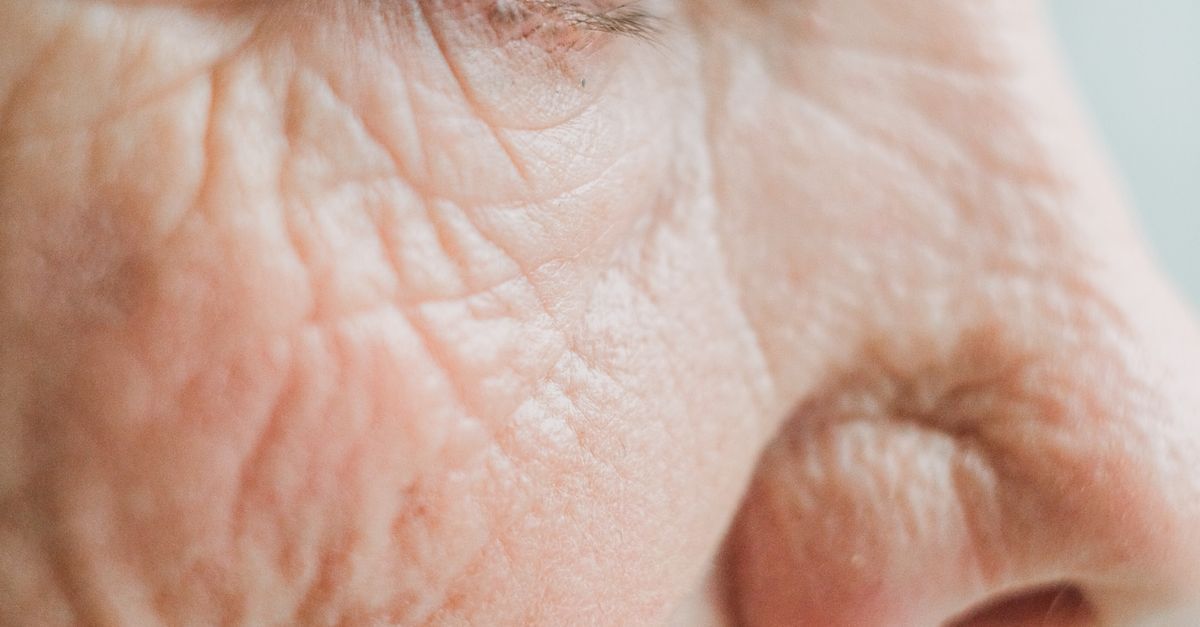
Quick answer: A skin-only facelift (subcutaneous facelift) lifts and trims the facial skin without repositioning the deeper SMAS layer. It was the original facelift method. Today most surgeons, in Korea and elsewhere, prefer SMAS or deep plane techniques because skin-only lifts tend to relax sooner and can look tight. It may still suit select patients, such as those with thin skin and little deep sagging.
What is a skin-only facelift?
A skin-only facelift, also called a subcutaneous facelift, is the oldest form of facelift. The surgeon separates the skin from the tissue beneath it, pulls it back toward the ear and trims the excess. The deeper supporting layer, the SMAS, is not lifted or tightened.
In the early decades of facelift surgery this was the standard method. Over time, surgeons found that skin is a poor structure for holding a lift. It stretches, so results tend to relax within a few years. Pulling skin hard to compensate can produce the tight, flat or "windswept" look many patients fear. This led to the development of the SMAS facelift and later the deep plane facelift, which carry the lift with deeper tissue.
Is a skin-only facelift still used?
Yes, but rarely as a primary facelift. Surgeons may still choose a skin-focused approach in specific situations:
- Small secondary tuck-ups. When a previous deep lift is still holding but some skin has relaxed.
- Loose skin with little deep descent. For example, some people after weight loss or with sun-damaged, crepey skin.
- Medical reasons. When a shorter operation under lighter anesthesia is safer for a patient.
- Combined procedures. As a finishing step after other deep work, such as neck liposuction.
If a clinic offers a skin-only lift as a first facelift for typical jowling and midface sagging, it is reasonable to ask why a deeper technique is not being recommended.
What questions should I ask before agreeing to one?
- Why is a skin-only approach better for me than a SMAS or deep plane lift?
- How much skin will be removed, and where will the scars sit?
- How long do you expect the result to last in someone with my skin?
- If the result relaxes early, what would a second procedure involve?
Clear, specific answers are a good sign. Vague answers, or pressure to decide quickly, are a reason to seek another opinion.
How does it compare to SMAS and deep plane facelifts?
- Durability: skin-only lifts usually relax sooner than lifts that tighten the SMAS.
- Naturalness: because all tension is on the skin, there is a higher risk of a stretched look and widened scars.
- Midface: skin-only lifts do little for cheek descent.
- Recovery: skin-only lifts are often quicker, with less swelling.
- Nerve risk: the dissection stays above the SMAS, so facial nerve injury is uncommon.
Some lighter lifts, such as the mini facelift or S-lift, also involve shorter incisions but usually include at least some SMAS tightening. Ask exactly which layers will be addressed.
Who might be a candidate?
A surgeon may consider a skin-only or skin-focused approach for:
- People with thin, lax skin but well-supported deep tissue
- Older patients for whom a shorter, lighter procedure is medically preferable
- Patients who have had a deep lift before and need only minor skin refinement
For people with mild laxity who want to avoid surgery altogether, options such as HIFU lifting or threads may be worth discussing first.
What is recovery like?
Recovery is usually lighter than after a deep plane or full facelift. Swelling and bruising often settle within one to two weeks, and stitches are typically removed around days 5–7. Because the skin carries the tension, careful scar care matters, and smokers face a higher risk of skin healing problems.
Skin-only facelifts in Seoul: what international patients should know
Few established Seoul surgeons market a skin-only lift as a main facelift option today. When the term appears, it is often in budget packages or short "mini lift" offers. Some advice:
- Ask what layer is lifted. Request a clear explanation of whether the SMAS is tightened, folded (plicated) or left alone.
- Compare value, not just price. A cheaper lift that relaxes in two to three years may cost more over time than a deeper lift.
- Check the operator. Make sure a board-certified plastic surgeon performs the operation.
- Be cautious of very low prices. See the guide to red flags in cheap offers.
This page is general information, not medical advice. Decisions about surgery should be made with a qualified, board-certified plastic surgeon after an in-person examination.
Key facts
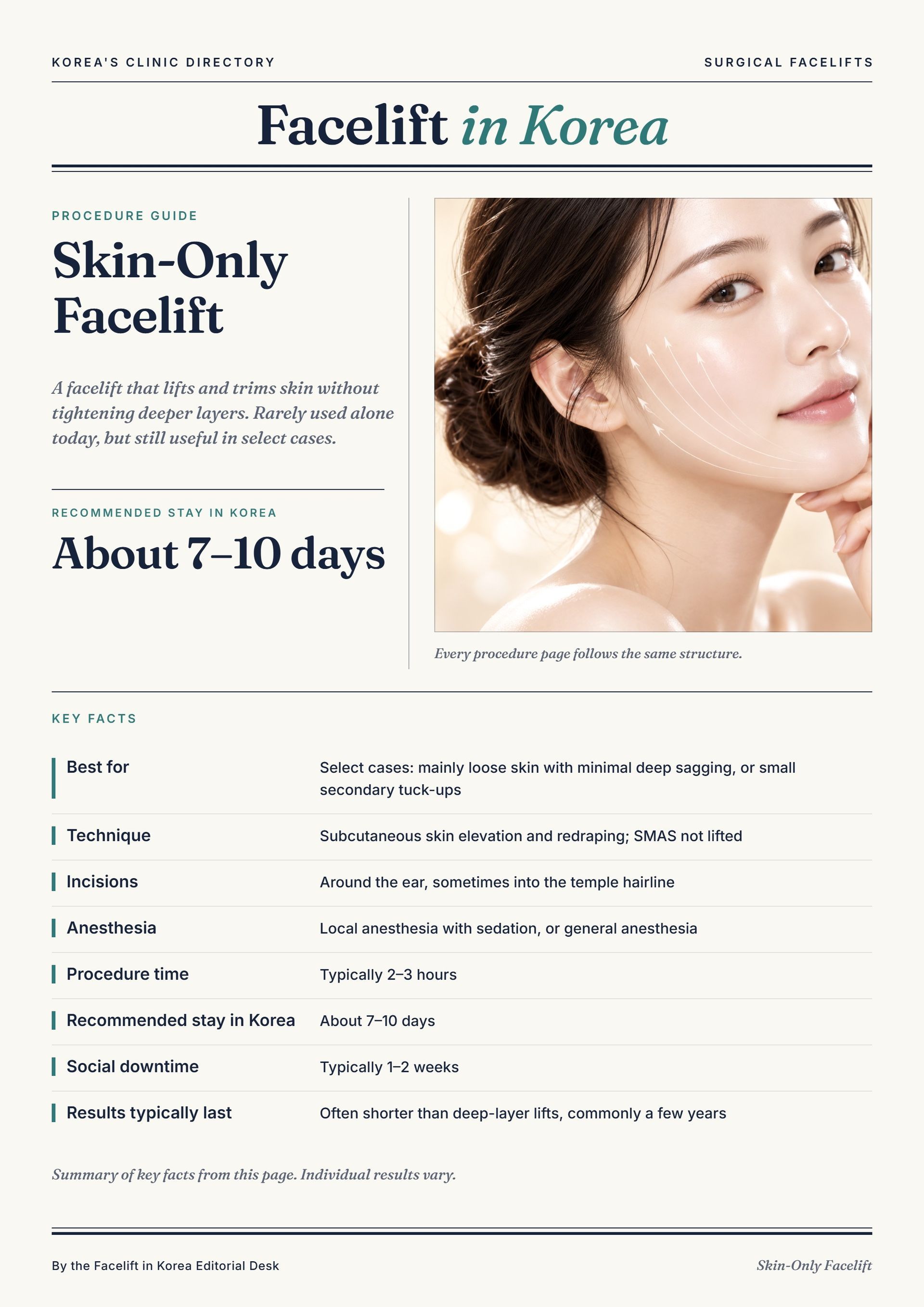
| Best for | Select cases: mainly loose skin with minimal deep sagging, or small secondary tuck-ups |
|---|---|
| Technique | Subcutaneous skin elevation and redraping; SMAS not lifted |
| Incisions | Around the ear, sometimes into the temple hairline |
| Anesthesia | Local anesthesia with sedation, or general anesthesia |
| Procedure time | Typically 2–3 hours |
| Recommended stay in Korea | About 7–10 days |
| Social downtime | Typically 1–2 weeks |
| Results typically last | Often shorter than deep-layer lifts, commonly a few years |
| Price guide | Mini facelift cost in Korea |
Read next
Reader questions
Frequently asked questions
What is the difference between a skin-only facelift and a SMAS facelift?
A skin-only facelift lifts and trims skin alone. A SMAS facelift also tightens the deeper supportive layer, which usually gives a more natural and longer-lasting result.
How long does a skin-only facelift last?
Results usually last a shorter time than deep-layer lifts, often a few years. Skin stretches over time, so the lift tends to relax sooner.
Why do skin-only facelifts sometimes look tight?
All the tension is placed on the skin. If the skin is pulled too much to compensate for deeper sagging, the face can look flat or stretched.
Is a skin-only facelift safer?
The dissection stays above the SMAS, so facial nerve injury is uncommon and recovery is often lighter. Other risks such as hematoma and scarring still apply.
Do Korean clinics still offer skin-only facelifts?
Some do, often as part of lower-cost or short-scar packages. Most experienced surgeons now recommend SMAS or deep plane techniques for typical facial sagging.
Next steps
Planning a facelift in Korea?
Compare clinics, check surgeon credentials and estimate your full trip budget before you book a consultation.
Facelift in Korea is an independent information directory. We do not perform procedures, and listings are not endorsements. This page is general information, not medical advice.