


Home › Surgical Facelifts › Mini Facelift
Surgical Facelifts
Mini Facelift in Seoul, Korea
By the Facelift in Korea Editorial Desk · Independent · How we report
The short answer
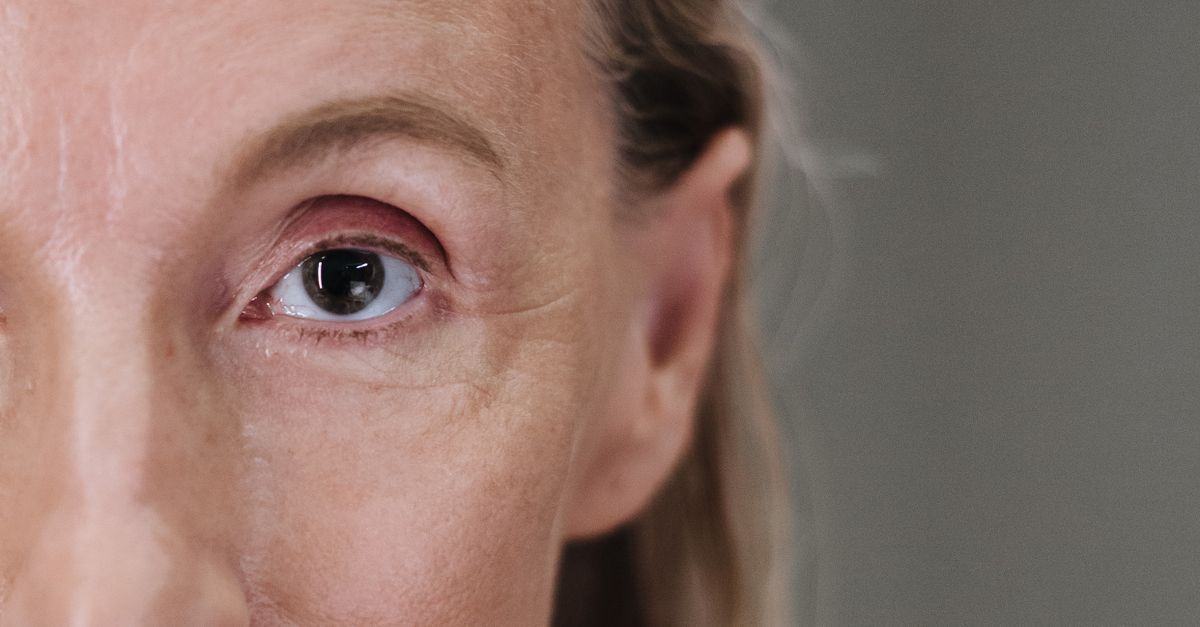
Quick answer: A mini facelift is a shorter-incision lift that tightens the lower cheeks and jawline, usually with limited SMAS work. It suits people with early jowling and good skin, typically in their 40s or early 50s. In Seoul it often takes 1.5 to 3 hours under sedation, with a recommended stay of about 7 to 10 days.
What is a mini facelift?
A mini facelift is a less extensive version of a traditional facelift. The surgeon uses a shorter incision, usually around the front of the ear, and lifts a smaller area of skin. The SMAS is commonly tightened with stitches (plication) rather than being fully dissected. The goal is to sharpen the jawline and soften early jowls without the longer recovery of a full facelift.
"Mini facelift" is not a single standardized operation. Clinics may call similar procedures a short-scar lift, a "weekend lift" or a MACS lift. Always ask exactly what is being done.
Who is a good candidate for a mini facelift?
A mini facelift tends to work best for:
- People in their 40s or early 50s with early lower-face sagging
- Good skin elasticity and little excess neck skin
- Patients who have outgrown HIFU or thread lifts and want a more durable change
- Those who want shorter downtime and accept a more modest result
It is usually not the right choice for significant neck laxity, heavy jowls or a deeply descended midface. In those cases a mini lift may leave the neck looking older than the face.
What can a mini facelift realistically achieve?
It can tighten the jawline, reduce early jowls and lift the lower cheeks slightly. It does not treat forehead lines, brow position, under-eye hollows or a turkey neck. It also does not add volume. Many patients pair it with fat grafting or fillers to restore fullness. If you are unsure whether you need a mini or a full lift, read Mini Facelift vs Full Facelift.
What is the recovery like?
Recovery is usually quicker than with a full facelift. Expect:
- Swelling and mild bruising for about 7 to 10 days
- Stitch removal around days 5 to 7
- Return to desk work and light social activity at around 10 to 14 days
- Numbness in front of the ears that improves over weeks
Avoid strenuous exercise, saunas and heavy lifting for 3 to 4 weeks. Sleep with your head raised for the first week.
What are the risks?
Even a "mini" lift is real surgery. Risks include hematoma, infection, visible scarring, temporary nerve weakness and asymmetry. A shorter incision can sometimes create skin bunching near the ear if too much skin needs removing, which is why proper candidate selection matters. Results also tend to fade sooner than with a full SMAS or deep plane lift.
Mini facelift or non-surgical lifting: how do I decide?
Many people considering a mini facelift have already tried energy devices or threads. Non-surgical options such as HIFU, radiofrequency and thread lifts can tighten skin a little and give a short-term lift, with little downtime. But they cannot remove excess skin or reposition the SMAS in a lasting way. Repeated sessions add up in cost over time.
A mini facelift may make more sense when:
- Jowls are visible at rest, not only when you look down
- Non-surgical results now last only a few months
- You want one recovery period rather than ongoing treatments
Our guide Surgical vs Non-Surgical Facelift walks through this decision step by step. An honest surgeon should also tell you if you are not yet ready for surgery.
Mini facelifts in Korea: what international patients should know
Mini facelifts are popular in Seoul with patients who have limited time off work. Some clinics market them as a quick fix that can be done in a short trip. Be cautious of offers that promise a one-week trip with no visible signs. Bruising and swelling vary between people.
Some Korean clinics offer the procedure under local anesthesia only. This can work for small lifts, but ask about pain control and whether an anesthesiologist is present. Clarify whether the surgeon who consults you is the one who operates. Our guide to how long to stay in Korea after a facelift can help you plan your trip.
This page is general information, not medical advice. Decisions about surgery should be made with a qualified, board-certified plastic surgeon after an in-person examination.
Key facts
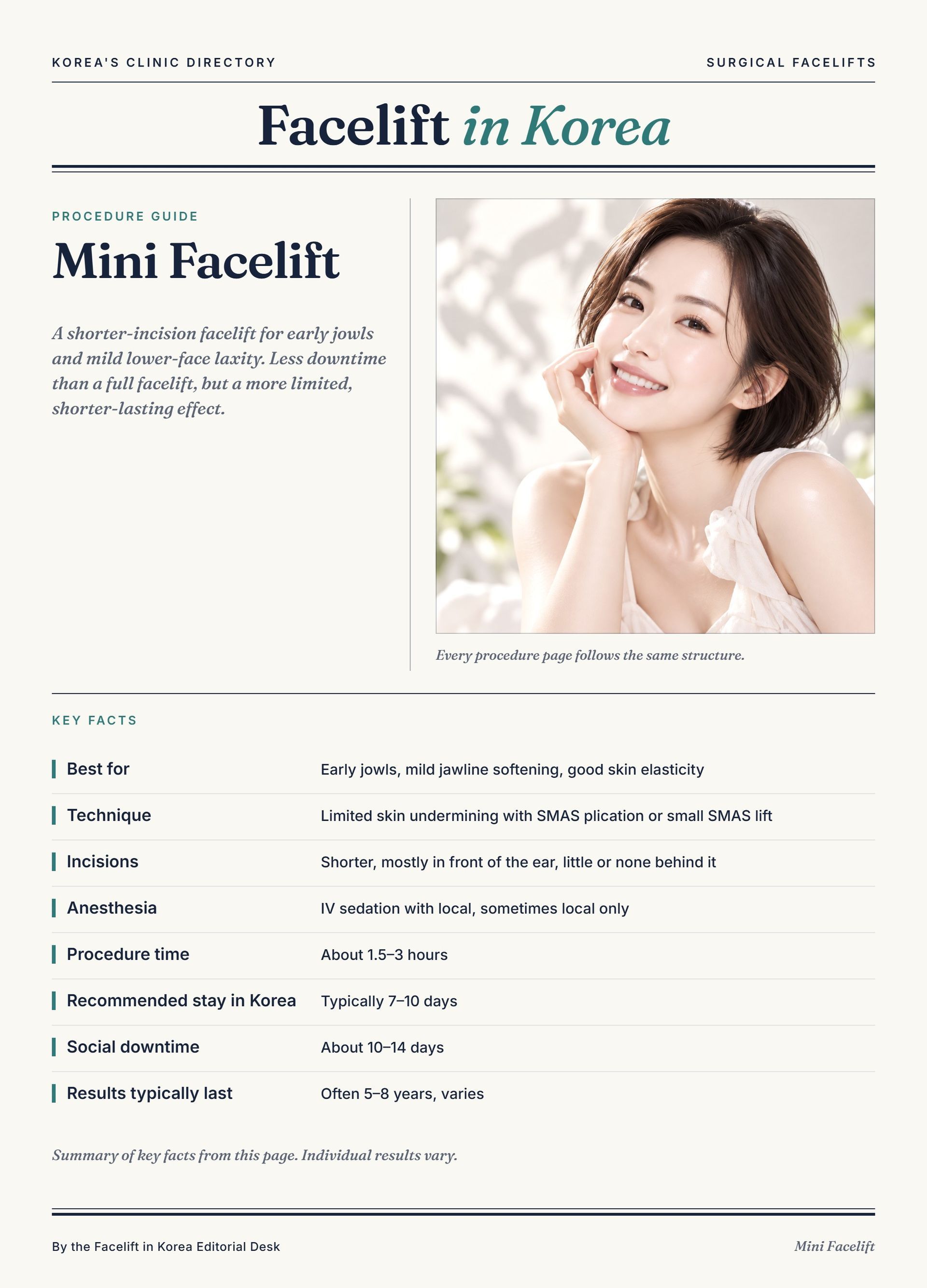
| Best for | Early jowls, mild jawline softening, good skin elasticity |
|---|---|
| Technique | Limited skin undermining with SMAS plication or small SMAS lift |
| Incisions | Shorter, mostly in front of the ear, little or none behind it |
| Anesthesia | IV sedation with local, sometimes local only |
| Procedure time | About 1.5–3 hours |
| Recommended stay in Korea | Typically 7–10 days |
| Social downtime | About 10–14 days |
| Results typically last | Often 5–8 years, varies |
| Price guide | Mini facelift cost in Korea |
Read next
Reader questions
Frequently asked questions
How long does a mini facelift last?
Many patients see benefits for around 5 to 8 years. Because less tissue is repositioned, it usually does not last as long as a full facelift.
Can a mini facelift fix my neck?
Usually not. A mini facelift focuses on the jawline and lower cheeks. Neck bands or loose neck skin often need a neck lift.
Is a mini facelift done awake?
Some clinics perform it under local anesthesia with oral or IV sedation. Ask what level of sedation is used and who monitors you.
What is the best age for a mini facelift?
There is no fixed age, but candidates are often in their 40s or early 50s with early sagging and good skin elasticity.
How visible are mini facelift scars?
Incisions are placed along natural creases near the ear and usually fade well over 6 to 12 months. Healing varies with skin type and aftercare.
Next steps
Planning a facelift in Korea?
Compare clinics, check surgeon credentials and estimate your full trip budget before you book a consultation.
Facelift in Korea is an independent information directory. We do not perform procedures, and listings are not endorsements. This page is general information, not medical advice.