


Home › Patient Guides › What to Eat After a Facelift
Patient Guides
What to Eat After a Facelift: Recovery Diet Tips (Including in Korea)
By the Facelift in Korea Editorial Desk · Independent · How we report
The short answer
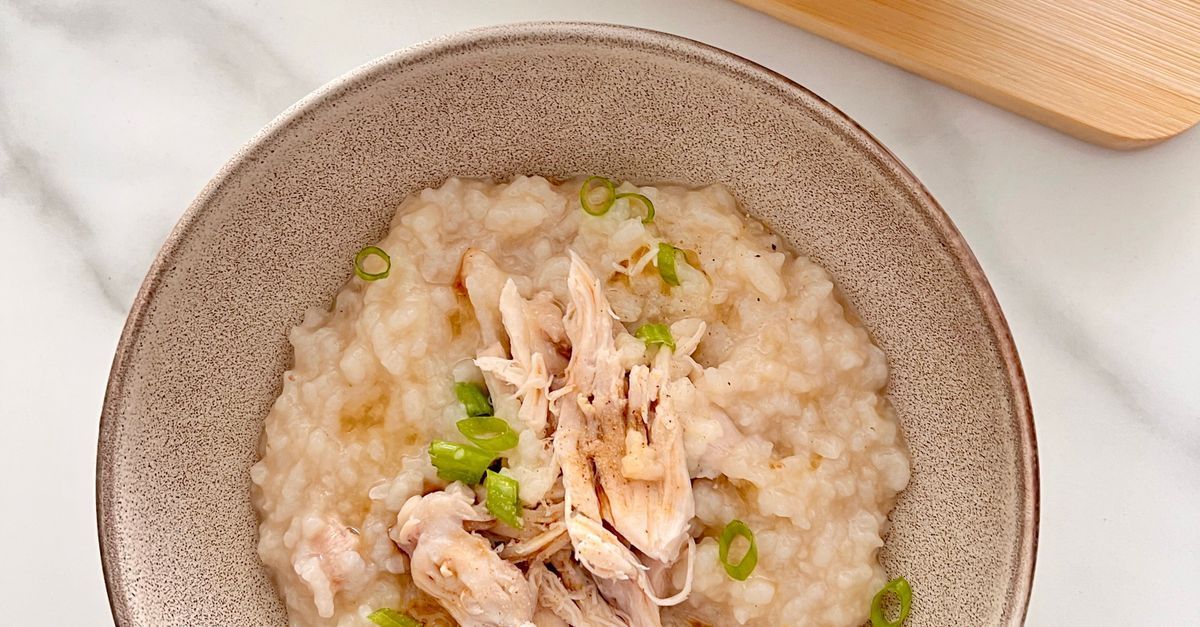
Quick answer: After a facelift, most surgeons suggest soft, easy-to-chew foods for the first several days, plenty of fluids, enough protein, and limited salt and alcohol to help with swelling and healing. In Korea, rice porridge (juk), steamed egg, tofu, soups and yogurt are easy to find. Follow your surgeon's specific diet instructions, especially around anesthesia and medicines.
Why does diet matter after a facelift?
Food will not change the shape of your result. But what you eat can affect comfort, swelling and healing. In the first days your jaw and cheeks may feel tight. Chewing can be tiring. Some medicines can upset your stomach. Simple, gentle food makes this phase easier.
Your clinic may give you its own diet sheet. Follow it, especially for fasting before anesthesia and taking medicines with food.
What should you eat in the first few days?
Most surgeons suggest soft, mild foods that need little chewing. Good choices include:
- Porridge, oatmeal and congee.
- Scrambled or steamed eggs.
- Soft tofu and well-cooked fish.
- Smooth soups and broths, cooled to warm.
- Yogurt, smoothies and mashed fruit such as banana.
- Mashed potato, sweet potato or pumpkin.
Eat small amounts often. Take medicines with food unless told otherwise. Use a straw only if your surgeon says it is fine.
What foods support healing?
- Protein. Eggs, fish, tofu, beans, dairy and lean meat help the body repair tissue.
- Fruit and vegetables. These provide vitamins and fiber. Fiber helps with constipation, which pain medicines can cause.
- Fluids. Water and non-caffeinated drinks help you stay hydrated, especially in heated or air-conditioned rooms.
There is no special "healing food" with proven effects on facelift results. A balanced diet is the goal. If you have diabetes, kidney disease or another condition that affects diet, ask your own doctor and surgeon how to adjust these general tips while you recover abroad.
What should you limit or avoid?
- Salt. High-salt food can make swelling worse. Many processed foods, instant noodles and some soups are very salty.
- Alcohol. It can increase swelling, interact with medicines and affect bleeding. Most surgeons advise avoiding it for at least the first one to two weeks. Ask yours.
- Very hot food and drink. Numb areas may not sense heat well, so you could burn your lips or mouth.
- Hard, chewy or crunchy food. Nuts, tough meat and crusty bread strain the jaw.
- Very spicy food. It can be irritating early on and may increase flushing.
- Supplements. Some supplements, such as fish oil, vitamin E and certain herbal products, can affect bleeding. Do not restart them until your surgeon agrees. See medications and supplements to stop.
What Korean foods are easy to eat during recovery in Seoul?
Seoul is a good place to recover from a food point of view. Many traditional dishes are soft and gentle:
- Juk (rice porridge). Sold at dedicated porridge chains and delivered widely. Plain, pumpkin (hobak-juk), abalone and vegetable versions are common. Ask for less salt or seasoning on the side.
- Gyeran-jjim (steamed egg). Soft and high in protein.
- Sundubu (soft tofu). The stew is often spicy. Ask for a mild version, or buy plain soft tofu at a convenience store.
- Miyeok-guk (seaweed soup). Traditionally eaten after childbirth in Korea. It can be salty, so ask for a lighter version.
- Yogurt, banana milk and soft bread from convenience stores.
Watch out for kimchi, jjigae stews and ramyeon, which are often salty and spicy. Some recovery stays in Gangnam offer soft meals. See where to stay while recovering in Gangnam.
When can you return to normal eating?
Many patients return to a normal diet within about one to two weeks as tightness eases. If you had a chin implant, neck work or other procedures, your surgeon may ask you to wait longer. Read facelift recovery day by day for how the first two weeks usually go.
What signs should you report?
Contact your clinic if you cannot keep fluids down, have severe nausea or vomiting, cannot open your mouth enough to eat, or have pain when swallowing that is getting worse. Vomiting and straining can raise blood pressure, which matters in the first days after surgery. Early advice helps. See also facelift risks and complications.
This page is general information, not medical advice. Decisions about surgery should be made with a qualified, board-certified plastic surgeon after an in-person examination.
Key facts
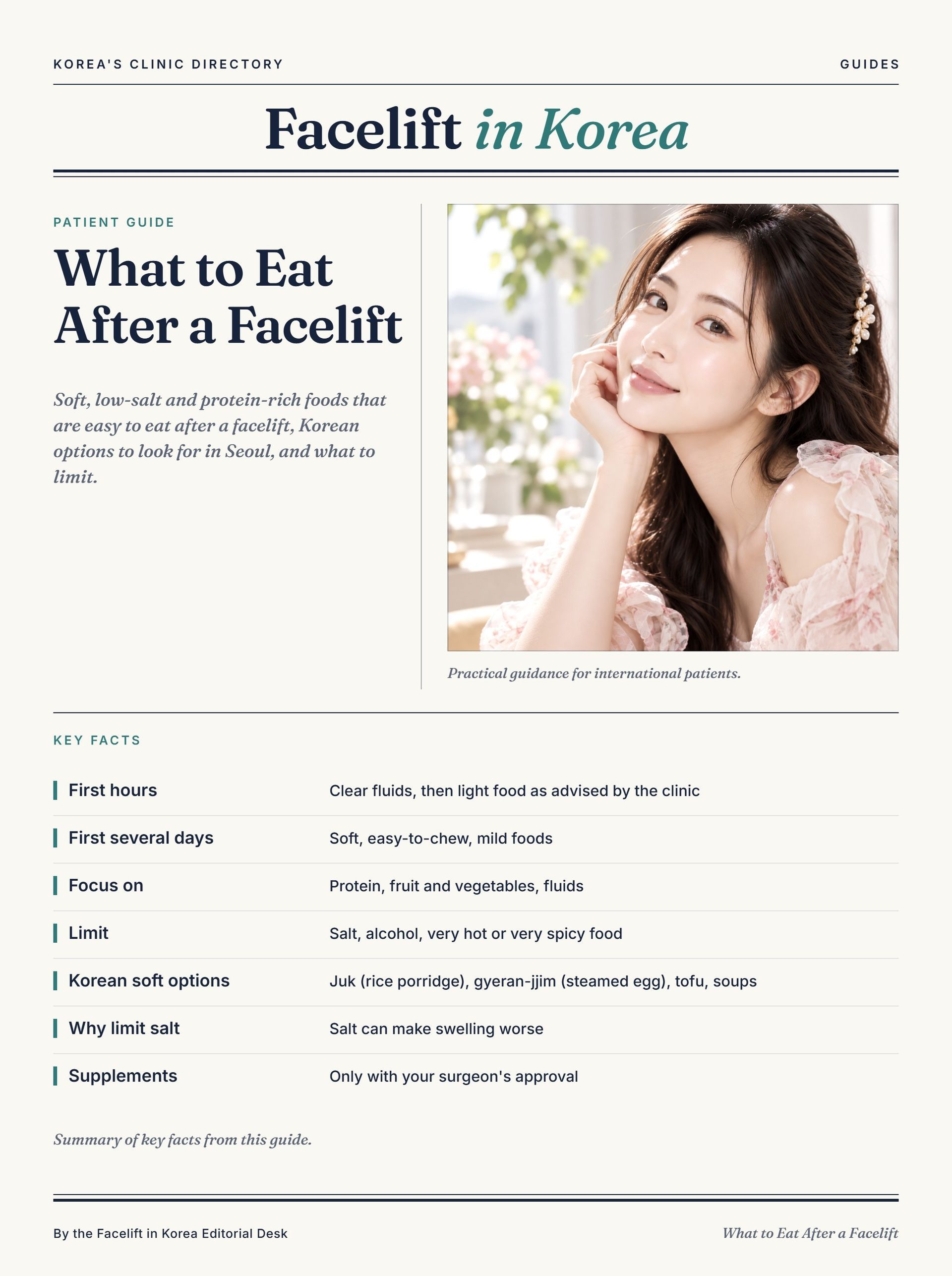
| First hours | Clear fluids, then light food as advised by the clinic |
|---|---|
| First several days | Soft, easy-to-chew, mild foods |
| Focus on | Protein, fruit and vegetables, fluids |
| Limit | Salt, alcohol, very hot or very spicy food |
| Korean soft options | Juk (rice porridge), gyeran-jjim (steamed egg), tofu, soups |
| Why limit salt | Salt can make swelling worse |
| Supplements | Only with your surgeon's approval |
| Related | Swelling and bruising |
Read next
Reader questions
Frequently asked questions
What can I eat right after a facelift?
Most clinics start with fluids and then soft, mild foods such as porridge, yogurt, eggs and soups. Follow your clinic's instructions, especially if you had general anesthesia.
Why should I avoid salt after a facelift?
Salt makes the body hold onto water, which can make facial swelling worse. Choosing lower-salt food is a simple way to help swelling settle.
When can I drink alcohol after a facelift?
Many surgeons advise avoiding alcohol for at least one to two weeks, and while taking certain medicines. Ask your surgeon for your specific timing.
Is Korean food good for facelift recovery?
Many Korean dishes, such as rice porridge, steamed egg and soft tofu, are ideal. Avoid very salty or spicy dishes like kimchi stews and instant noodles early on.
Should I take supplements to heal faster?
There is no supplement proven to speed facelift healing, and some can increase bleeding. Only take supplements your surgeon approves.
Next steps
Planning a facelift in Korea?
Compare clinics, check surgeon credentials and estimate your full trip budget before you book a consultation.
Facelift in Korea is an independent information directory. We do not perform procedures, and listings are not endorsements. This page is general information, not medical advice.