


Home › Non-Surgical Lifting › InMode Forma
Non-Surgical Lifting
InMode Forma in Seoul, Korea: Bipolar RF Skin Tightening
By the Facelift in Korea Editorial Desk · Independent · How we report
The short answer
Quick answer: InMode Forma is a bipolar radiofrequency treatment that heats the skin to a controlled temperature to tighten collagen and improve texture. It feels like a warm facial massage and has no downtime. Results build over a series of weekly sessions, often four to eight, followed by maintenance. It suits mild laxity and dull, crepey skin.
What is InMode Forma?
Forma is a radiofrequency handpiece made by InMode, an aesthetic device company based in Israel. It runs on InMode platforms that also host other handpieces, including Morpheus8.
Forma uses bipolar radiofrequency. Current flows between two electrodes within the same handpiece, so heating stays in the upper layers of skin. Built-in sensors monitor skin temperature and cut energy when a set temperature is reached. The aim is to keep tissue warm long enough to stimulate collagen without burning.
How is Forma different from Thermage-type RF?
Monopolar devices like Thermage FLX send energy deeper and deliver a strong single session. Forma works more gently, closer to the surface, and relies on repeated sessions.
- Feel: Forma is warm and relaxing; monopolar RF has hotter, sharper pulses.
- Plan: Forma uses a series of visits; monopolar RF is usually once a year.
- Downtime: Both have little or none.
- Effect: Forma is mainly about skin quality and mild tightening; deeper RF aims for more contraction.
If you are deciding between energy types, HIFU vs RF lifting gives a simple framework.
Who is a good candidate for Forma?
Forma suits people with early skin changes who prefer comfort and zero downtime. It is often chosen by:
- People in their late 20s to 40s starting preventive care
- Those with dull or slightly crepey skin
- People who dislike needles or painful devices
- Patients maintaining results after surgery or stronger treatments
It is not designed to lift heavy sagging. People with metal implants in the area, pacemakers or certain skin conditions may not be suitable.
What happens during a Forma session?
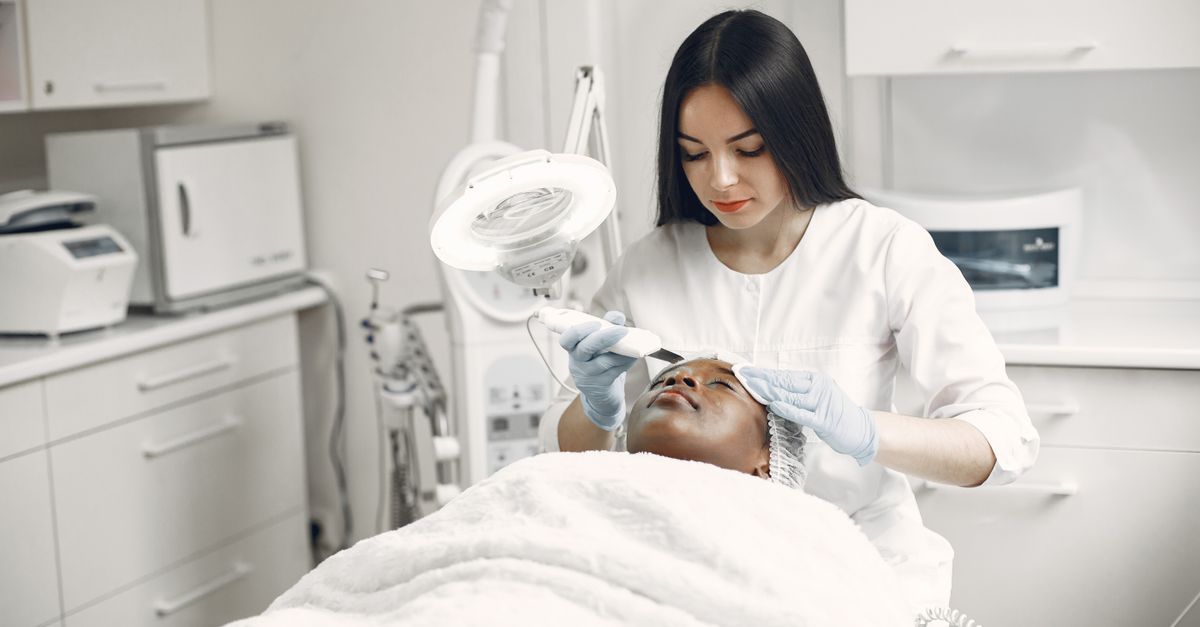
No numbing is needed. A conductive gel is applied, and the practitioner glides the handpiece over the skin in slow circles. The skin warms gradually. Once the target temperature is reached in an area, the practitioner keeps it there for a few minutes before moving on.
A face session usually takes 20 to 40 minutes. Afterward, the skin may look pink and feel warm, with a temporary glow. You can put makeup on and go about your day immediately.
How is Forma offered in Seoul?
In Seoul, bipolar RF treatments like Forma are often included in skin "management" packages alongside facials, LED, skin boosters and other devices. Some clinics sell a block of sessions at a reduced price.
For international visitors, the series format is the main challenge. Weekly sessions work well if you live in Seoul or stay for several weeks. On a short trip, a single session gives a temporary glow but little lasting tightening. Ask whether a one-off session is worth it, or whether a single-session device such as Thermage FLX fits your schedule better.
What results and risks are realistic?
Most people notice brighter, smoother skin after the first few sessions. Firming builds gradually over the series and then needs maintenance. Changes are subtle by design.
Side effects are uncommon and mild: temporary redness and warmth. Rarely, small burns or blisters can occur if temperature is not controlled. As with any treatment, ask who performs it and what training they have. For people with more significant sagging, read the surgical vs non-surgical facelift guide.
How can Forma fit into a longer stay in Korea?
Forma makes most sense for people who spend several weeks in Seoul, such as those recovering from surgery, working remotely, or visiting family. In that setting, a weekly session can be a relaxing part of the routine.
After facial surgery, energy devices are usually avoided until the surgeon says the tissue has healed enough. That is often several weeks or more, so ask before booking. If you are combining treatments, a common approach is to start with any stronger procedure first and use gentle RF like Forma later for maintenance.
Keep a simple log of session dates and settings. If you continue treatment at home, a new provider will find it useful.
This page is general information, not medical advice. Decisions about surgery should be made with a qualified, board-certified plastic surgeon after an in-person examination.
Key facts
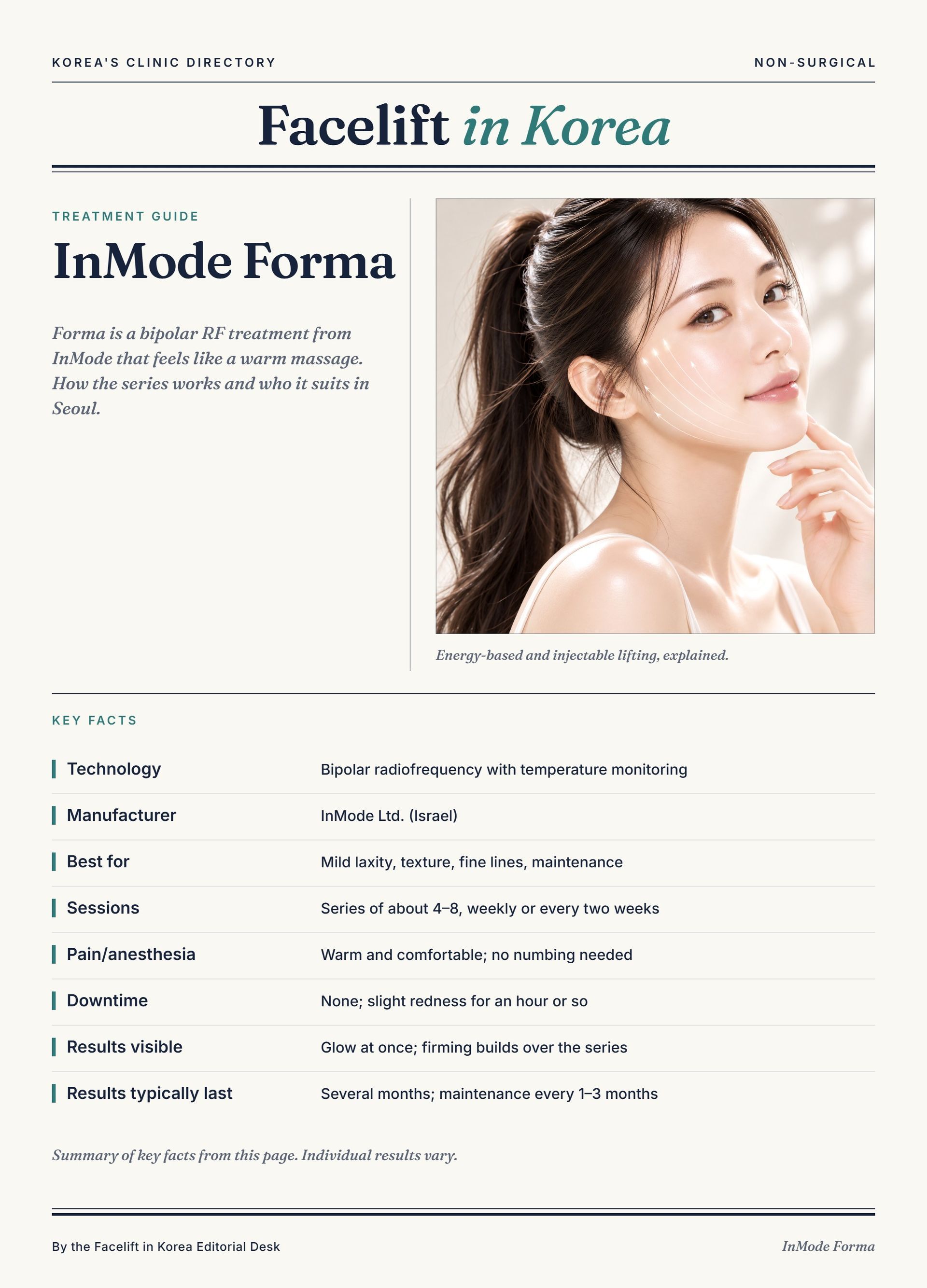
| Technology | Bipolar radiofrequency with temperature monitoring |
|---|---|
| Manufacturer | InMode Ltd. (Israel) |
| Best for | Mild laxity, texture, fine lines, maintenance |
| Sessions | Series of about 4–8, weekly or every two weeks |
| Pain/anesthesia | Warm and comfortable; no numbing needed |
| Downtime | None; slight redness for an hour or so |
| Results visible | Glow at once; firming builds over the series |
| Results typically last | Several months; maintenance every 1–3 months |
| Price guide | Non-surgical lifting cost in Korea |
Read next
Reader questions
Frequently asked questions
How many Forma sessions do I need?
Clinics commonly suggest a series of about four to eight sessions, one to two weeks apart, followed by maintenance every one to three months. Your plan depends on your skin and goals.
Does InMode Forma hurt?
Forma usually feels like a warm massage and does not need numbing cream. Some areas may feel hot briefly, and energy can be adjusted.
Is there any downtime after Forma?
No, there is generally no downtime. The skin may look slightly pink for an hour or so. You can wear makeup and return to normal activity straight away.
Can Forma be combined with Morpheus8?
Yes. Both run on InMode platforms, and some clinics alternate Forma for gentle skin tightening with Morpheus8 for deeper remodeling. Space treatments as your doctor advises.
Is Forma worth it on a short trip to Korea?
A single session gives a temporary glow but limited tightening. If you only have a few days, a single-session treatment may suit you better. Ask the clinic for an honest opinion.
Next steps
Planning a facelift in Korea?
Compare clinics, check surgeon credentials and estimate your full trip budget before you book a consultation.
Facelift in Korea is an independent information directory. We do not perform procedures, and listings are not endorsements. This page is general information, not medical advice.