


Home › Patient Guides › Facelift Guide for Men
Patient Guides
Facelift Guide for Men: What Male Patients Considering Korea Should Know
By the Facelift in Korea Editorial Desk · Independent · How we report
The short answer
Quick answer: A male facelift aims to firm the jawline and neck while keeping a masculine, natural look. Surgeons adjust incisions to protect sideburns and the beard line, avoid over-tightening, and plan carefully because men tend to have a higher risk of hematoma. Recovery is similar to women, about one to two weeks of social downtime. Choose a surgeon with male results to show.

How is a male facelift different?
A facelift for men uses the same basic techniques as for women, such as SMAS or deep plane lifting, but the goals and details differ. Men usually want a strong, clean jawline and a firmer neck. They do not want a "tight" or feminized look. Our procedure page on facelift for men covers technique in more detail.
Key differences surgeons often describe include:
- Beard-bearing skin. When cheek skin is lifted back, some beard-growing skin moves toward or behind the ear. Surgeons plan incisions to limit this, but some men need to shave in new areas.
- Sideburns and hairline. Incisions are placed to avoid pulling the sideburn up or back. A displaced sideburn is a common sign of an unnatural male facelift.
- Short hair. Men often have less hair to hide scars behind the ear and at the hairline, so incision placement and closure matter more.
- Thicker skin and more blood vessels. Male facial skin has a richer blood supply, which is linked to more bleeding.
Why is hematoma risk higher in men?
Many surgical reports describe a higher rate of hematoma, a collection of blood under the skin, in men than in women after facelift. Possible reasons include more blood vessels in beard skin and higher blood pressure. Surgeons often take extra steps, such as careful blood pressure control around surgery, drains or tissue sealing methods. You can help by:
- Controlling blood pressure before surgery, with your doctor's help.
- Stopping blood-thinning supplements and painkillers as instructed. See medications to stop before a facelift.
- Avoiding alcohol, straining and heavy lifting during early recovery.
- Reporting rapid swelling on one side straight away.
What concerns bring men to a facelift?
- Jowls that blur the jawline.
- Loose neck skin or a "turkey neck."
- Fat under the chin that does not respond to diet.
- Heavy upper eyelids or under-eye bags, often treated at the same time.
- Wanting to look rested at work without looking "done."
Who is a good candidate?
A good candidate has visible jowling or neck laxity, is in good general health, does not smoke or can stop, and has realistic goals. Men with a weak chin may also benefit from a chin implant. Men with mainly fat under the chin and good skin may need only neck liposuction. Your surgeon will assess skin quality, bone structure and the neck carefully.
What should male patients in Korea know?
Most patients at Korean plastic surgery clinics are women, but many Seoul clinics also treat men and some market male-specific lifting. When you review clinics:
- Ask to see before-and-after photos of male facelift patients specifically, including side views of the sideburn and ear. See how to read before-and-after photos.
- Ask how the surgeon handles the beard line and sideburns.
- Ask what steps they take to reduce hematoma risk in men.
- Look out for a "one-size" approach. Male aesthetic goals in Korea often lean toward a refined, natural look, but you should state your own goals clearly.
Korean clinics often recommend non-surgical lifting first for men with early changes. That can be a sensible step. See surgical vs non-surgical facelift.
What does recovery look like for men?
Recovery is broadly similar to women. Swelling and bruising usually peak in the first few days and settle over one to two weeks. You may not be able to shave normally for a short time, and numbness around the ears is common. Facial hair growth can help hide early bruising for some men. Most surgeons advise avoiding strenuous exercise, including weight training, for several weeks. Ask for specific timings. Read facelift recovery day by day for a typical course.
How can men plan the trip?
- Plan about 10 to 14 days in Korea, longer if you add neck or eyelid work.
- Bring button-front shirts and an electric razor if your surgeon allows shaving.
- Keep work calls light for the first week. Video calls may reveal swelling.
- Many men return to office work after about two weeks.
This page is general information, not medical advice. Decisions about surgery should be made with a qualified, board-certified plastic surgeon after an in-person examination.
Key facts
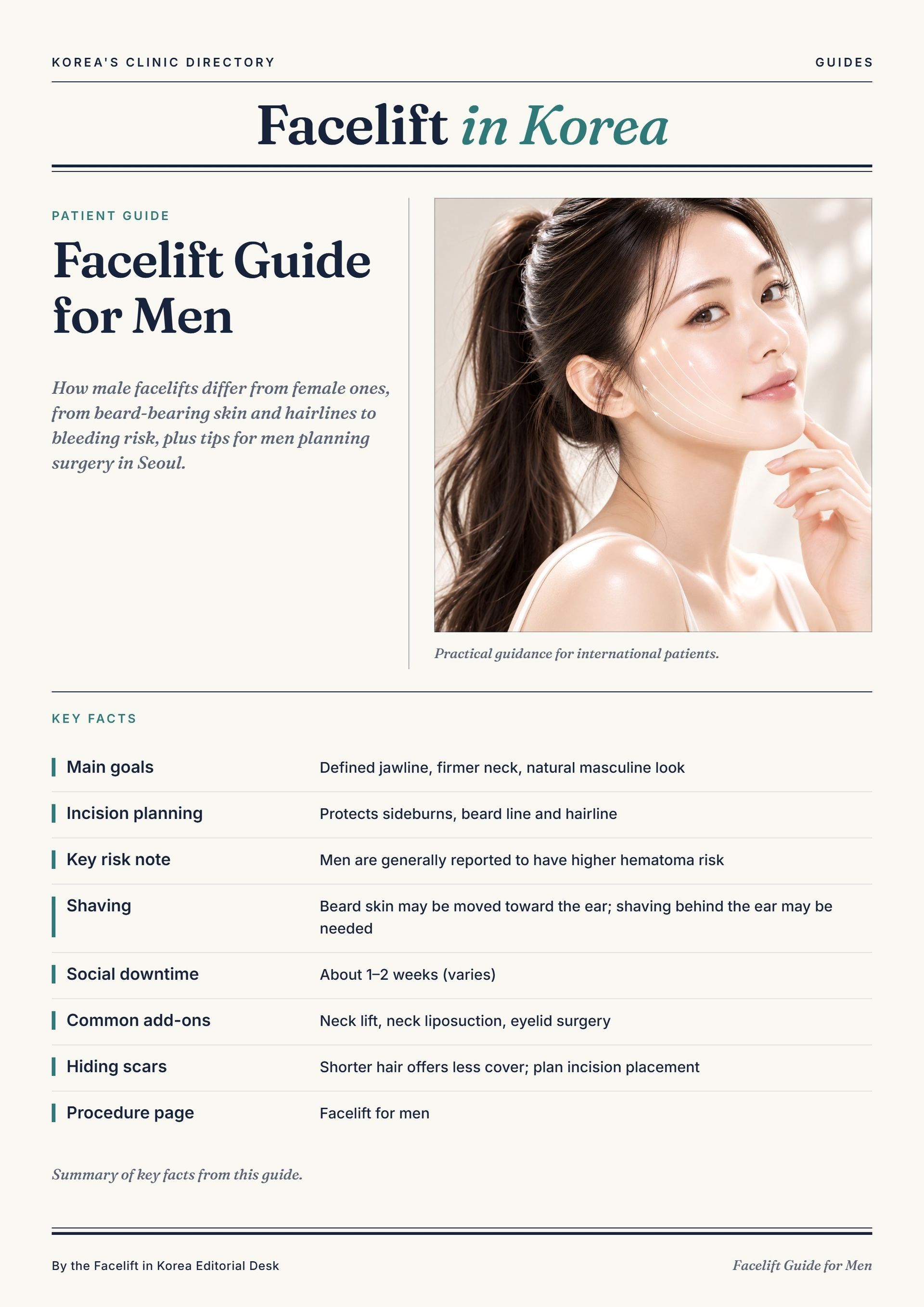
| Main goals | Defined jawline, firmer neck, natural masculine look |
|---|---|
| Incision planning | Protects sideburns, beard line and hairline |
| Key risk note | Men are generally reported to have higher hematoma risk |
| Shaving | Beard skin may be moved toward the ear; shaving behind the ear may be needed |
| Social downtime | About 1–2 weeks (varies) |
| Common add-ons | Neck lift, neck liposuction, eyelid surgery |
| Hiding scars | Shorter hair offers less cover; plan incision placement |
| Procedure page | Facelift for men |
Read next
Reader questions
Frequently asked questions
Is a facelift for men different from a facelift for women?
The basic techniques are similar, but surgeons adjust incisions to protect sideburns and the beard line, avoid over-tightening and take extra care with bleeding risk. The goal is a natural masculine jawline.
Will I have to shave behind my ears after a facelift?
Some men do, because beard-bearing skin can move toward the ear when cheek skin is lifted. Surgeons plan incisions to limit this. Ask your surgeon what to expect.
Are men at higher risk of complications after a facelift?
Men are generally reported to have a higher risk of hematoma, partly due to more blood vessels in beard skin and blood pressure. Surgeons use extra precautions to reduce this.
How long before a man can return to work after a facelift?
Many men return to desk work after about two weeks. Physical jobs and heavy exercise often need several more weeks. Follow your surgeon's advice.
Do Korean clinics do facelifts for men?
Yes. Many Seoul clinics treat male patients. Ask to see male before-and-after photos and how they handle sideburns and beard skin.
Next steps
Planning a facelift in Korea?
Compare clinics, check surgeon credentials and estimate your full trip budget before you book a consultation.
Facelift in Korea is an independent information directory. We do not perform procedures, and listings are not endorsements. This page is general information, not medical advice.