


Home › Comparisons › Shurink vs Ultherapy
Comparison
Shurink vs Ultherapy: Korean HIFU vs the Original Ultrasound Lift
By the Facelift in Korea Editorial Desk · Independent · How we report
The short answer
Quick answer: Shurink is a Korean-made HIFU device known for faster, more comfortable sessions and lower per-session prices in Seoul. Ultherapy is an imaging-guided micro-focused ultrasound device that lets the operator see tissue layers while treating. Choose Shurink if you want affordable, repeatable maintenance lifting with less discomfort. Choose Ultherapy if you want a deeper, more targeted single treatment and are comfortable with a higher price.
Side by side
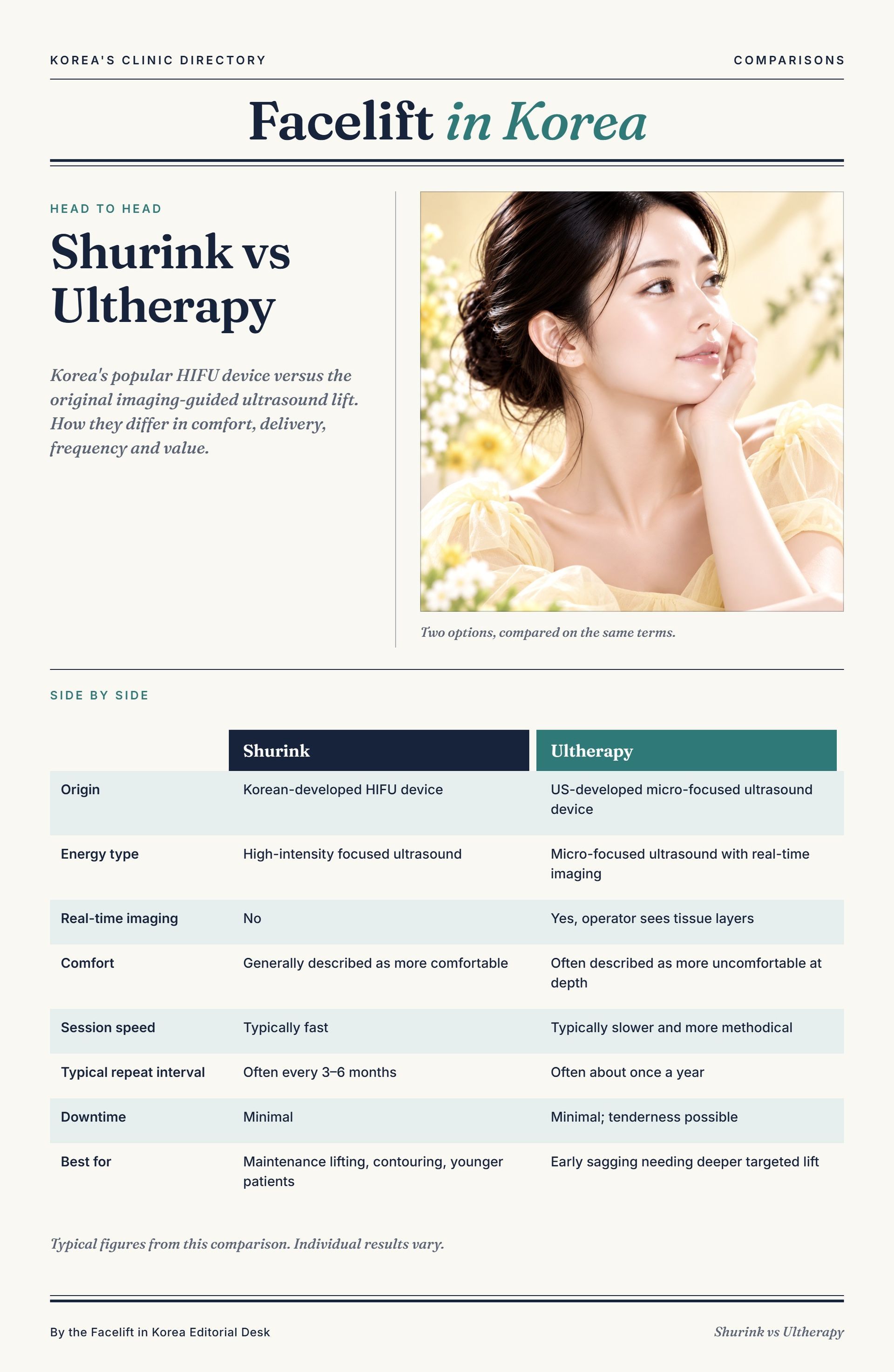
| Shurink | Ultherapy | |
|---|---|---|
| Origin | Korean-developed HIFU device | US-developed micro-focused ultrasound device |
| Energy type | High-intensity focused ultrasound | Micro-focused ultrasound with real-time imaging |
| Real-time imaging | No | Yes, operator sees tissue layers |
| Comfort | Generally described as more comfortable | Often described as more uncomfortable at depth |
| Session speed | Typically fast | Typically slower and more methodical |
| Typical repeat interval | Often every 3–6 months | Often about once a year |
| Downtime | Minimal | Minimal; tenderness possible |
| Best for | Maintenance lifting, contouring, younger patients | Early sagging needing deeper targeted lift |
| Price guide | Shurink cost in Korea | Ultherapy cost in Korea |
What is Shurink?
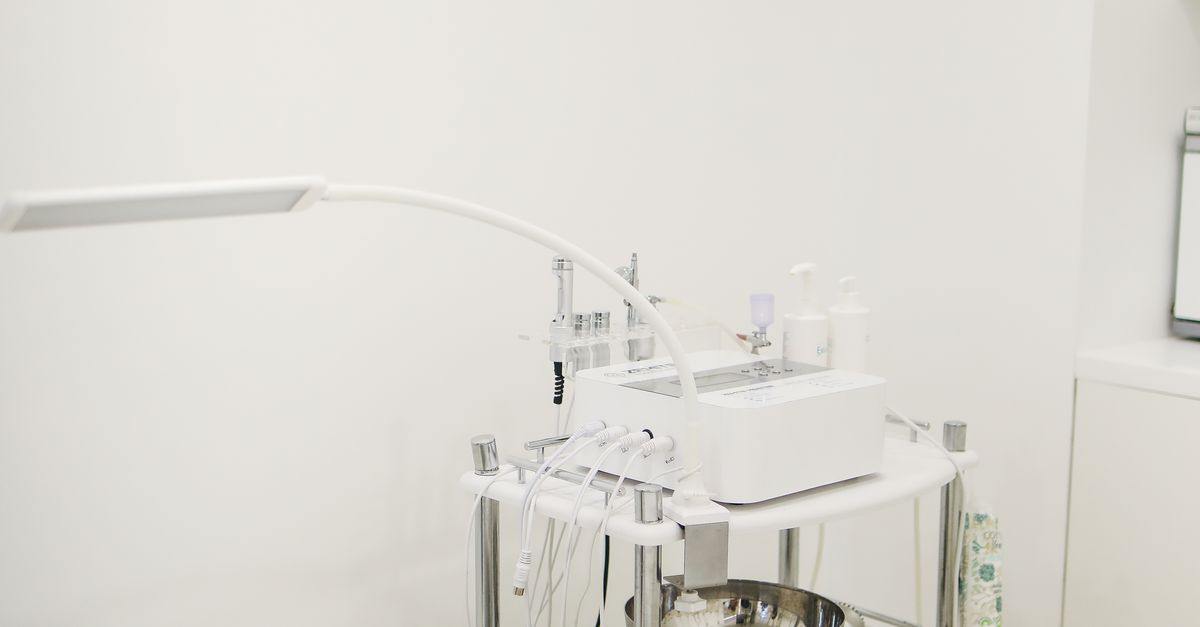
Shurink is a HIFU device developed in Korea. Like other HIFU systems, it focuses ultrasound energy into small points beneath the skin to create controlled heat. This stimulates collagen and can tighten and lift tissue over the following weeks. Newer versions of the device offer different cartridges and delivery modes for the face and body.
Shurink is extremely common in Seoul. Many clinics use it for regular maintenance and facial contouring because sessions are quick and generally well tolerated.
What is Ultherapy?
Ultherapy is a branded micro-focused ultrasound device. Its defining feature is a built-in ultrasound image. This lets the operator see the skin, fat, muscle and bone layers and place energy at the intended depth. It is often used for early jowls, the brow and under the chin.
How do they differ in practice?
- Visualization: Ultherapy shows the tissue layers on screen during treatment. Shurink relies on preset depths and the operator's anatomical knowledge.
- Comfort: many patients find Shurink more comfortable. Ultherapy can be quite sore at deeper settings.
- Frequency: Shurink is often repeated every few months as maintenance. Ultherapy is usually done about once a year.
- Price: Shurink sessions are usually much cheaper per session in Korea. Compare prices on the non-surgical lifting cost page.
Which gives better results?
There is no simple answer. Results depend on the number of shots, the depths chosen, your skin and tissue, and the operator. Some patients prefer one strong annual Ultherapy session. Others prefer more frequent, gentler Shurink sessions. Both are best suited to mild laxity. Neither replaces surgery for heavy jowls or a loose neck; see facelift vs thread lift for surgical comparisons.
Are there safety differences?
Both are generally low risk when used correctly. Possible side effects include temporary redness, swelling, tenderness, numbness or small bruises. Rarely, nerve irritation or unwanted fat loss can occur if energy is delivered too close to nerves or at excessive settings. Choosing a trained provider matters more than the device brand.
What should I know about Shurink and Ultherapy in Seoul?
Seoul is one of the most competitive markets for HIFU. Prices are often advertised by shot count, and promotional prices can be strikingly low. International patients should ask:
- Which exact device and cartridge will be used, and is it genuine?
- How many shots will be delivered, and to which areas and depths?
- Will a doctor plan and perform the treatment, or a technician?
- Can I see the unopened cartridge or its counter before treatment?
Some clinics offer combinations, such as Shurink with an RF device or skin booster. These can be useful, but make sure each element is needed. The HIFU vs RF comparison explains how combinations work.
Which should I choose for a short trip to Korea?
Both treatments have minimal downtime, so you can usually return to sightseeing the same day. If you visit Seoul once a year, a single Ultherapy session may suit your schedule. If you visit often or live nearby, regular Shurink sessions may offer good value. If you are combining lifting with surgery, ask your surgeon about timing, as energy devices are usually avoided over fresh surgical areas.
Who is not a good candidate?
HIFU is less suitable for people with heavy sagging, very thin faces where fat loss would be a concern, active skin infections, or open wounds in the treatment area. Tell your provider about fillers, threads, implants and previous energy treatments so the plan can be adjusted.
What should I expect on the day?
Most clinics cleanse the skin, apply numbing cream for twenty to forty minutes, and mark the treatment areas. The session itself usually takes twenty minutes to an hour, depending on the device and shot count. Afterward, mild redness or a feeling of tightness is common. You can usually wear makeup the next day. Avoid saunas, intense exercise and harsh skincare for a day or two, and use sunscreen. Results build gradually, so judge the effect after two to three months rather than in the first week.
This page is general information, not medical advice. Decisions about surgery should be made with a qualified, board-certified plastic surgeon after an in-person examination.
Reader questions
Frequently asked questions
Is Shurink the same as Ultherapy?
No. Both use focused ultrasound to heat tissue below the skin, but Ultherapy includes real-time imaging and is typically used less often at higher intensity. Shurink is a Korean HIFU device often used for more frequent maintenance sessions.
Is Shurink less painful than Ultherapy?
Many patients report that Shurink is more comfortable. Pain depends on settings, depth, the area treated and individual tolerance.
How often can I have Shurink?
Many Seoul clinics suggest repeating Shurink every three to six months for maintenance. Your provider should base the interval on your skin and the settings used.
Why is Shurink cheaper than Ultherapy in Korea?
Shurink is made in Korea, and its consumables and device costs are generally lower. Prices also vary with shot count and clinic, so compare like for like.
Can Shurink or Ultherapy replace a facelift?
No. Both are suited to mild laxity and maintenance. Moderate or severe sagging usually needs a surgical lift for a meaningful result.
Next steps
Planning a facelift in Korea?
Compare clinics, check surgeon credentials and estimate your full trip budget before you book a consultation.
Facelift in Korea is an independent information directory. We do not perform procedures, and listings are not endorsements. This page is general information, not medical advice.