


Home › Surgical Facelifts › Facelift at 70+
Surgical Facelifts
Facelift at 70 and Older: What to Know in Seoul, Korea
By the Facelift in Korea Editorial Desk · Independent · How we report

The short answer
Quick answer: A facelift at 70 or older can be safe for people in good health, with careful medical screening. Goals are usually a refreshed, rested look rather than dramatic change. Surgeons may adjust the plan, for example by limiting operating time, choosing lighter anesthesia or staging procedures. Recovery is often slower. Plan about 14–21 days in Korea and travel with a companion.
Can you have a facelift at 70 or older?
Yes. Many surgeons perform facelifts on people in their 70s and even 80s. Surgeon experience suggests that in carefully selected, healthy older patients, outcomes and complication rates can be comparable to those in younger groups. The key words are "carefully selected." Overall health, not age alone, determines whether surgery is sensible.
People seek facelifts at this age for many reasons: to look as energetic as they feel, to improve neck sagging that bothers them, or because they have wanted a change for years and now have the time.
Are older patients common in Seoul clinics?
Korea is one of the fastest-aging societies in the world, and Seoul clinics see a growing number of patients in their late 60s and 70s, both Korean and international. Older Korean patients often ask for a modest, dignified change rather than a dramatic one, and many surgeons plan with that in mind. In faces with heavier soft tissue, the neck and jowls are usually the main concern at this age, while thin-skinned faces tend to show more hollowing and fine wrinkling. The plan should reflect which pattern you have.
What health checks are usually needed?
Expect a more detailed assessment than for younger patients. This commonly includes:
- Blood tests, including blood count, kidney function and blood sugar
- An ECG and sometimes a heart or lung assessment
- Review of all medications, especially blood thinners, blood pressure tablets and supplements
- Assessment of conditions such as diabetes, heart disease, sleep apnea or osteoporosis
- Clearance from your regular doctor in some cases
Good blood pressure control is especially important, because high blood pressure after surgery raises the risk of hematoma. The medications to stop before a facelift guide lists common items to review, but never stop prescribed medication without your doctor's advice.
How might the surgical plan differ?
Surgeons often adjust plans for older patients:
- Operating time. Some prefer to limit total time under anesthesia and may suggest staging procedures.
- Anesthesia choice. Depending on health, IV sedation with local anesthesia may be considered. The anesthesia options guide explains the differences.
- Technique. Deep plane or SMAS lifts are still used, but some surgeons choose a more limited dissection for people with fragile skin or health concerns.
- Neck focus. The neck is often the main concern, and a neck lift may be the most valuable part of the operation.
- Volume. Fat grafting may be used conservatively to restore softness.
What results are realistic?
A facelift at 70+ can produce a clear improvement in the jawline and neck and a more rested appearance. However, older skin is thinner and less elastic, and deep wrinkles and sun damage will remain unless treated separately. The aim is usually to look like a healthy, refreshed version of yourself rather than decades younger. The guide to reading before-and-after photos can help set realistic expectations.
What is recovery like?
Recovery usually takes longer:
- Swelling and bruising may last several weeks
- Fatigue in the first two weeks is common
- Most people feel ready for social activities at about 4–6 weeks
- Gentle walking from day one helps reduce clot risk
Having a companion to help with meals, medications and appointments is strongly recommended.
Facelifts at 70+ in Seoul: what international patients should know
Seoul's major clinics and hospitals have strong medical infrastructure, which can be reassuring for older patients. However, traveling for surgery adds strain. Practical advice:
- Choose a facility with medical backup. Ask whether the clinic has an anesthesiologist on site, overnight monitoring and arrangements with a nearby hospital.
- Stay longer. About 14–21 days allows recovery before a long flight. The flying after a facelift guide covers clot prevention.
- Plan accessible accommodation. Choose a quiet place near the clinic with an elevator and easy access to meals.
- Arrange insurance and follow-up. Confirm cover for complications and identify a doctor at home who can check on you.
This page is general information, not medical advice. Decisions about surgery should be made with a qualified, board-certified plastic surgeon after an in-person examination.
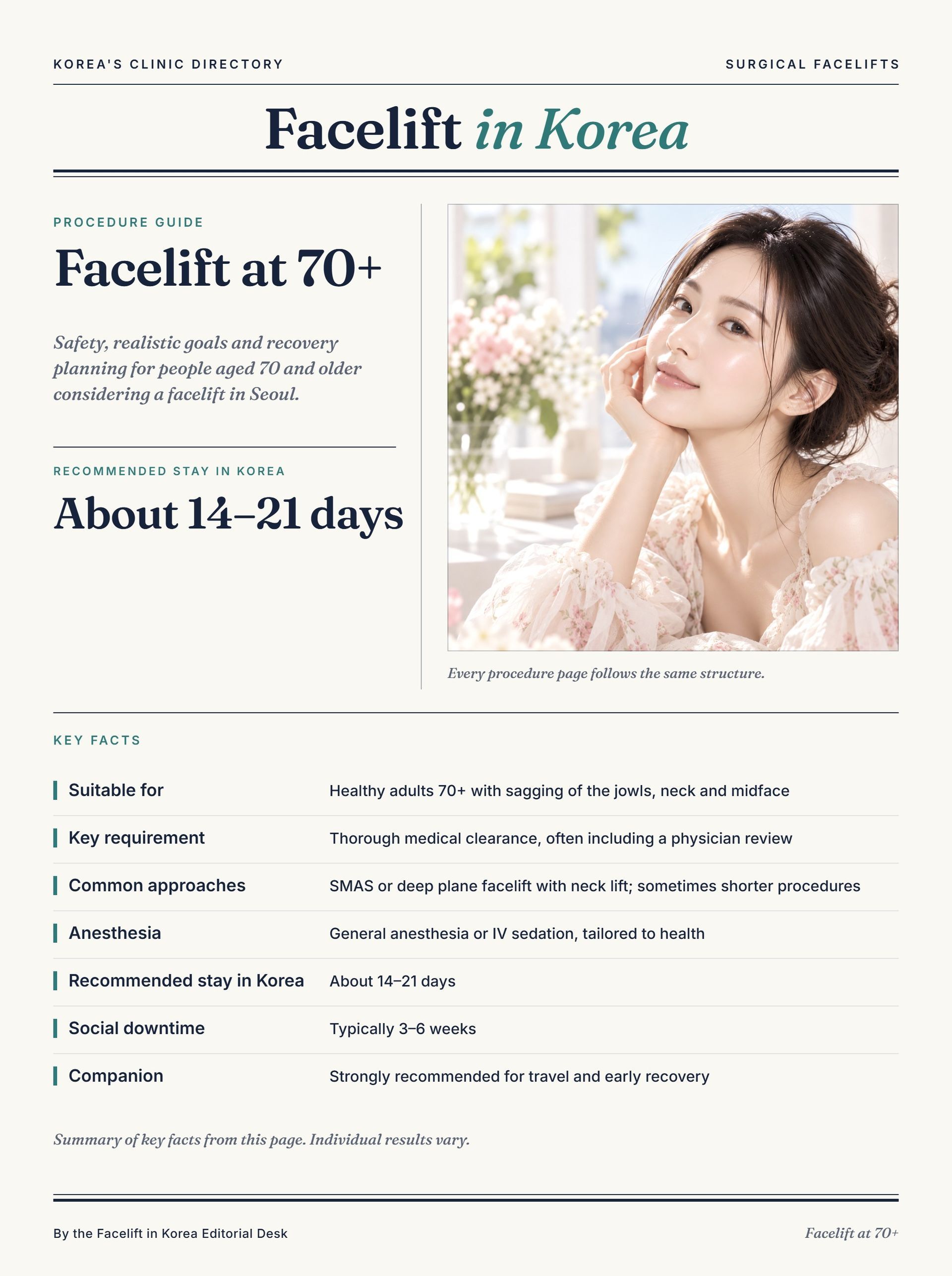
Key facts
| Suitable for | Healthy adults 70+ with sagging of the jowls, neck and midface |
|---|---|
| Key requirement | Thorough medical clearance, often including a physician review |
| Common approaches | SMAS or deep plane facelift with neck lift; sometimes shorter procedures |
| Anesthesia | General anesthesia or IV sedation, tailored to health |
| Recommended stay in Korea | About 14–21 days |
| Social downtime | Typically 3–6 weeks |
| Companion | Strongly recommended for travel and early recovery |
| Price guide | Total facelift trip budget |
Read next
Reader questions
Frequently asked questions
Is it safe to have a facelift at 75?
For healthy people with good medical clearance, a facelift can be performed safely at 75. Your surgeon and anesthesia team will assess your specific risks.
Do older patients heal more slowly after a facelift?
Healing is often slower, with longer-lasting swelling and fatigue. Most people need 4–6 weeks before feeling socially comfortable.
Can a facelift be done under sedation instead of general anesthesia?
Sometimes. Depending on the procedure and your health, IV sedation with local anesthesia may be an option. Your surgeon and anesthesiologist will advise.
How long will a facelift last if I have it at 70?
Results can last many years. The face continues to age, but most people keep a noticeable improvement compared with no surgery.
Should I travel alone to Seoul for a facelift at 70+?
Traveling with a companion is strongly recommended. They can help with daily needs and appointments during the first weeks of recovery.
Next steps
Planning a facelift in Korea?
Compare clinics, check surgeon credentials and estimate your full trip budget before you book a consultation.
Facelift in Korea is an independent information directory. We do not perform procedures, and listings are not endorsements. This page is general information, not medical advice.