


Home › Non-Surgical Lifting › Laser Facelift
Non-Surgical Lifting
Laser Facelift in Seoul, Korea: What the Term Really Means
By the Facelift in Korea Editorial Desk · Independent · How we report
The short answer
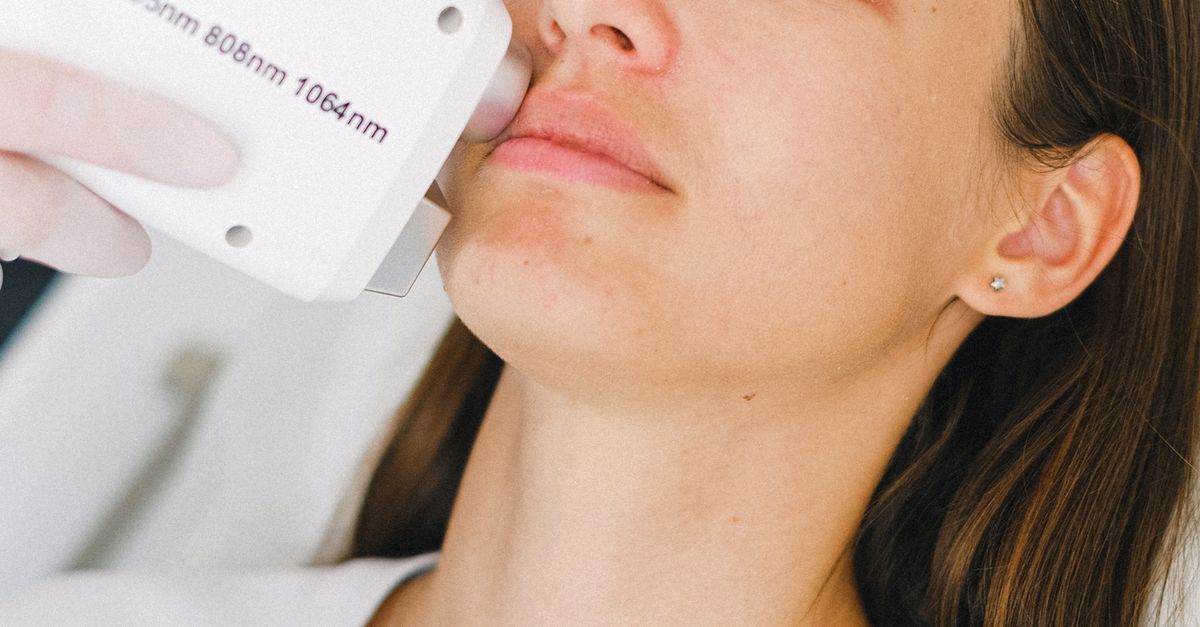
Quick answer: A "laser facelift" is a marketing term, not a single procedure. In Seoul it usually means laser resurfacing to improve wrinkles and skin quality, or non-ablative laser programs that tighten skin slightly. Lasers mainly treat the skin surface and dermis. They do not reposition sagging deep tissue the way a surgical facelift does.
What do clinics mean by a "laser facelift"?
The phrase is used loosely around the world, and Seoul is no exception. When a clinic advertises a laser facelift, it may mean one of three things:
- Laser resurfacing. An ablative laser removes thin layers of skin, or creates tiny columns of injury (fractional), to trigger new collagen and smoother skin.
- Non-ablative laser tightening. Lasers heat the deeper skin without breaking the surface, giving mild tightening with little downtime.
- Laser-assisted surgery. Occasionally, a laser is used as a cutting or fat-melting tool during a surgical procedure. This is still surgery.
Always ask exactly which device, which settings and which layer will be treated.
What can lasers actually improve?
Lasers are excellent tools for the skin itself. They can soften fine lines, improve rough texture, fade sun spots, and tighten crepey skin a little. Ablative fractional resurfacing gives the strongest skin-quality change, with the longest recovery.
What lasers cannot do is lift descended deep tissue. The cheek fat pads, jowls and neck bands sit below the skin and are held by ligaments and the SMAS layer. Moving them requires surgery or, for mild cases, focused ultrasound or threads. That is why many surgeons pair a facelift with resurfacing rather than treating them as alternatives. Our surgical vs non-surgical facelift guide explains the layers.
Which lasers are common in Seoul?
Korean dermatology and plastic surgery clinics use a wide range of devices. Common categories include:
- Fractional CO2 lasers for wrinkles, acne scars and stronger resurfacing
- Erbium lasers for lighter or more controlled resurfacing
- Nd:YAG and combination programs, sometimes marketed as multi-step "lifting" protocols
- Diode laser programs, such as Titanium lifting, which aim for comfortable, low-downtime tightening
Brand names change quickly, so focus on the category, the expected downtime and the doctor's experience with Asian skin tones.
Who is a good candidate?
Laser treatments suit people whose main concern is skin quality rather than sagging. Examples:
- Fine lines around the eyes and mouth
- Sun damage, uneven tone or large pores
- Mild crepiness with good underlying structure
- People who have had a facelift and want better skin texture
People with darker or easily pigmented skin can still be treated, but settings must be chosen carefully to reduce the risk of post-inflammatory hyperpigmentation. Avoid ablative lasers if you recently took isotretinoin or have active infection.
What should international patients plan for?
Downtime is the key factor for travelers.
- Non-ablative treatments usually allow normal activity the same day.
- Fractional ablative resurfacing can cause redness, oozing and peeling for five to ten days, and pinkness for weeks.
- Strict sun protection is essential afterward, which matters if you are sightseeing in summer.
If you are combining resurfacing with surgery in Seoul, the surgeon will set the order and timing. Plan enough nights in the city and read how long to stay in Korea before booking flights.
What are the risks?
Risks depend on depth. Light treatments may cause redness and swelling for a day or two. Deeper resurfacing carries risks of infection, prolonged redness, pigment changes, scarring and cold-sore flare-ups. Antiviral medication is often prescribed in advance for deep resurfacing.
Choose a clinic with a doctor who explains the device, shows realistic photos of similar skin types and gives clear aftercare instructions in a language you understand.
How do lasers compare with other lifting options?
It helps to think in layers. Lasers act on the skin. RF devices heat the dermis and the fibrous tissue below it. Focused ultrasound reaches the SMAS. Threads physically suspend soft tissue. Surgery repositions deep structures and removes skin.
Most people with visible aging have changes in more than one layer. That is why a sensible plan in Seoul often mixes methods: a facelift or HIFU for support, then a laser for texture and tone.
Questions to ask at consultation:
- Which layer is causing my main concern?
- What would a laser alone change, in honest terms?
- What downtime should I plan for, day by day?
- How many sessions, and how far apart?
If the answers point mostly to sagging rather than skin quality, look at full face lifting options before booking a laser package.
This page is general information, not medical advice. Decisions about surgery should be made with a qualified, board-certified plastic surgeon after an in-person examination.
Key facts
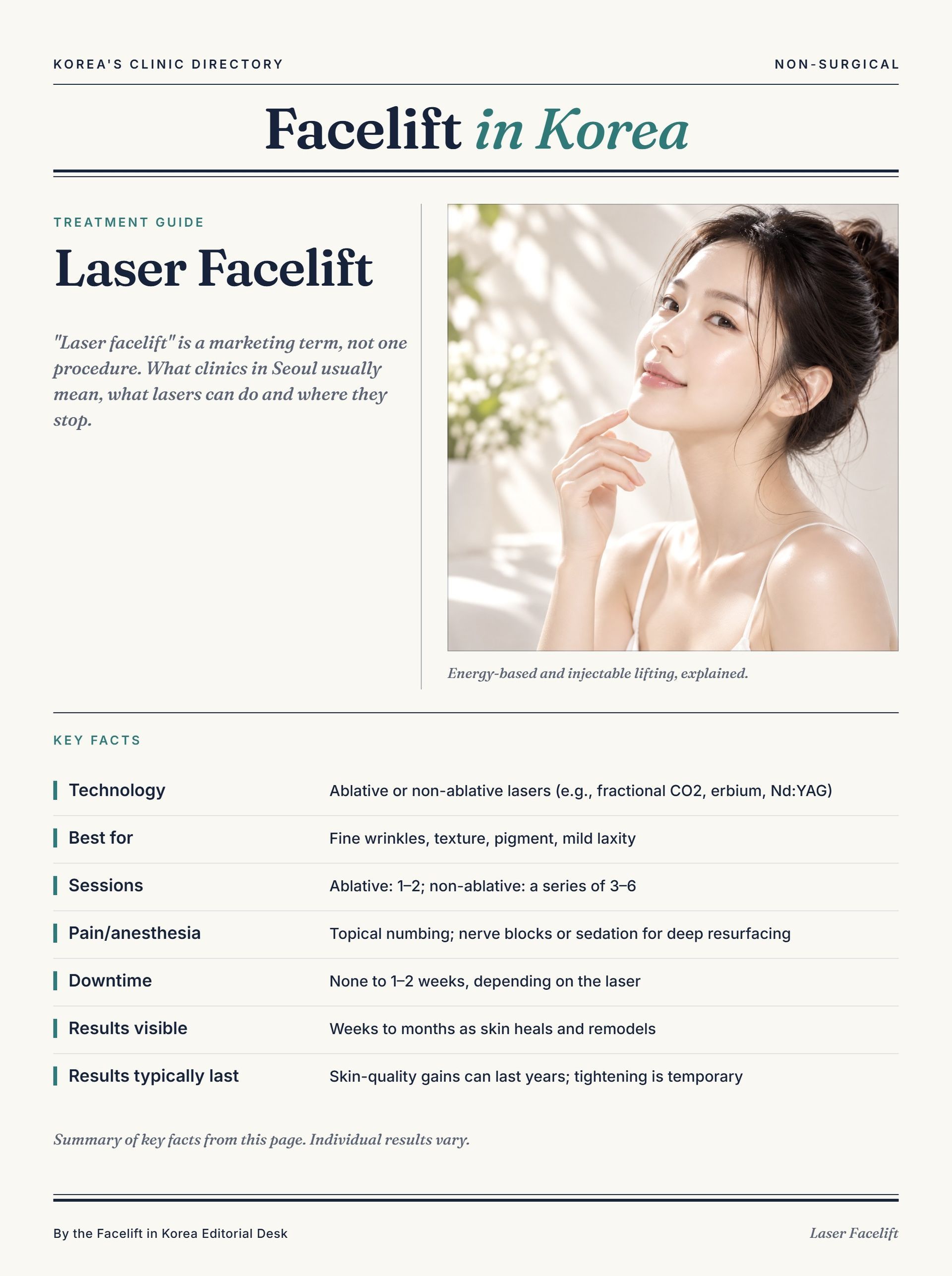
| Technology | Ablative or non-ablative lasers (e.g., fractional CO2, erbium, Nd:YAG) |
|---|---|
| Best for | Fine wrinkles, texture, pigment, mild laxity |
| Sessions | Ablative: 1–2; non-ablative: a series of 3–6 |
| Pain/anesthesia | Topical numbing; nerve blocks or sedation for deep resurfacing |
| Downtime | None to 1–2 weeks, depending on the laser |
| Results visible | Weeks to months as skin heals and remodels |
| Results typically last | Skin-quality gains can last years; tightening is temporary |
| Price guide | Non-surgical lifting cost in Korea |
Read next
Reader questions
Frequently asked questions
Is a laser facelift the same as a surgical facelift?
No. A surgical facelift repositions deep tissue and removes excess skin. Laser treatments improve the skin surface and can tighten it slightly, but they do not lift sagging deep structures.
How long is recovery after laser resurfacing?
Non-ablative treatments have little or no downtime. Fractional ablative resurfacing usually needs five to ten days before you look presentable, with pinkness that can last several weeks.
Can lasers be done at the same time as a facelift?
Yes, surgeons sometimes perform resurfacing during or after a facelift to improve skin texture. The timing and the areas treated are decided by the surgeon to protect healing skin.
Are lasers safe for Asian skin?
Lasers are widely used on Asian skin in Korea. The main concern is post-inflammatory hyperpigmentation, so settings, pre-treatment care and sun protection are important. Choose a doctor experienced with your skin type.
How many laser sessions do I need?
It depends on the device. Ablative resurfacing may need only one or two sessions, while gentler non-ablative programs are often done as a series of three to six sessions a few weeks apart.
Next steps
Planning a facelift in Korea?
Compare clinics, check surgeon credentials and estimate your full trip budget before you book a consultation.
Facelift in Korea is an independent information directory. We do not perform procedures, and listings are not endorsements. This page is general information, not medical advice.