


Home › Patient Guides › Ghost Surgery in Korea
Patient Guides
Ghost Surgery in Korea and How to Avoid It
By the Facelift in Korea Editorial Desk · Independent · How we report
The short answer
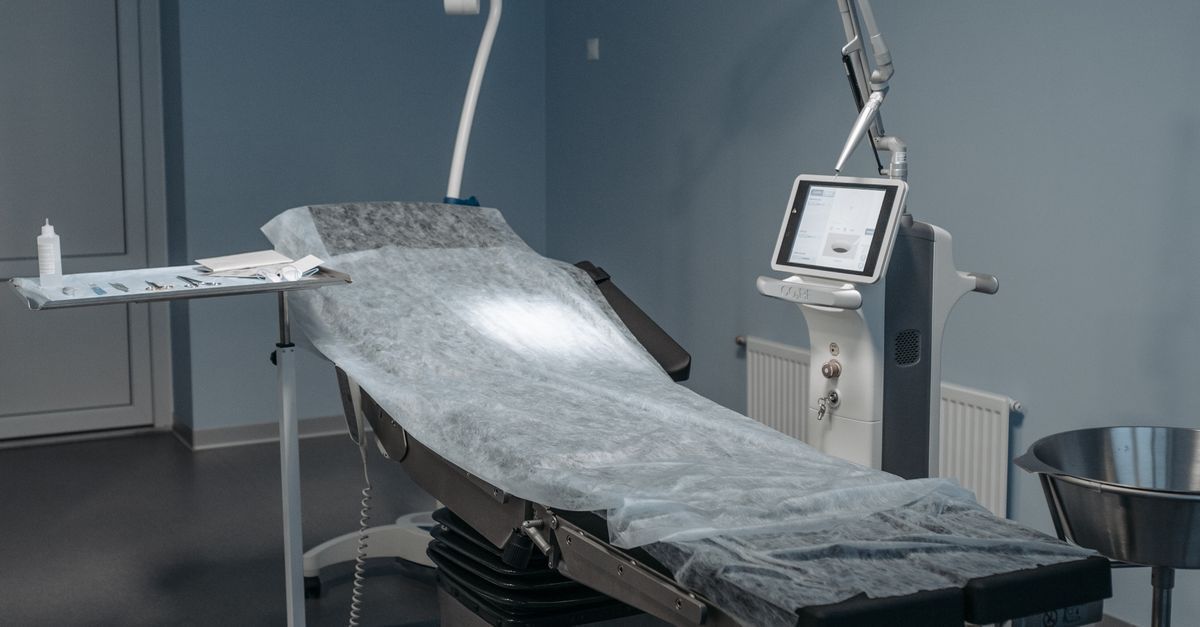
Quick answer: Ghost surgery is when a different doctor performs your operation without your knowledge, while the surgeon you chose is absent. Korean law now requires consent forms for surgery under general anesthesia to name the participating doctors, written notice if the main surgeon changes, and CCTV recording on request since September 2023. Ask for these protections in writing before your facelift.

What is ghost surgery?
Ghost surgery, also called proxy surgery, happens when the surgeon you consulted and agreed to does not perform your operation. Instead, another doctor operates, sometimes a less experienced or non-specialist doctor, while you are under anesthesia and unaware. It is a serious breach of trust because your consent was based on a specific surgeon.
This differs from normal team surgery. In many hospitals, assistants or trainees help under the lead surgeon's direct supervision, and the lead surgeon stays responsible. That is acceptable when you are told in advance. The problem is concealment.
Why is ghost surgery discussed so much in Korea?
In the 2010s, several cases at high-volume Seoul cosmetic clinics drew national attention, including fraud charges against clinic directors and a widely reported death after surgery. These cases led to public campaigns by patients' families, debates in the National Assembly and changes in law and regulation. Today, ghost surgery is far more visible as an issue in Korea than in many countries, and protections have grown as a result.
What does Korean law require now?
- Named doctors on consent: under Article 24-2 of the Medical Service Act, before surgery that carries serious risk, involves general anesthesia or transfusion, the doctor must explain the operation and obtain written consent. The information includes the names of the doctors participating in the surgery.
- Notice of change: if the main participating doctor changes, the clinic must tell you in writing or electronically, without delay, with the reason.
- Penalties: breaching these duties can lead to an administrative fine of up to KRW 3 million, separate from any civil claim for damages. Researchers note that concealed substitution may also be prosecuted under criminal laws such as fraud or bodily injury.
- Standard contracts: Korea's Fair Trade Commission revised the standard surgery contract in 2016 so participating doctors and their specialties are listed.
How does the operating-room CCTV law work?
A revision to the Medical Service Act took effect on September 25, 2023. Hospitals and clinics that perform surgery under general anesthesia, or other states where the patient is unconscious, must install CCTV in operating rooms and must record the surgery if the patient or guardian requests it. Footage must be kept for at least 30 days. Clinics may refuse in limited situations, such as emergencies or when recording would seriously disrupt life-saving care. Viewing the footage is restricted, for example to investigations, court proceedings or when the patient and medical staff agree. Violations can bring fines of up to KRW 5 million. Patient groups have criticized the exceptions as broad, so make your request early and in writing.
How can international patients protect themselves in Seoul?
- Ask at the consultation: "Will you personally perform the entire operation, including closing?" Write down the answer.
- Check that your surgeon's name appears on the consent form, and ask for a copy in English.
- Request CCTV recording in writing before surgery day, if your facelift is under general anesthesia.
- Ask who the anesthesiologist is and whether they stay in the room throughout.
- Be cautious with very high-volume clinics that offer unusually low prices; see cheap facelift red flags.
- Meet your surgeon on surgery day before anesthesia begins.
Choosing a surgeon carefully remains the best protection. Read how to choose a facelift surgeon in Korea and how to verify a board-certified plastic surgeon.
What if I suspect ghost surgery?
Request your medical records and, if recorded, ask that the footage be preserved before the retention period ends. Seek advice from Medical Korea's support services, the Korea Medical Dispute Mediation and Arbitration Agency, or a Korean lawyer experienced in medical cases. Our guide to medical disputes in Korea explains the routes. Asking the right questions before surgery, using our consultation question list, is much easier than proving a problem afterward.
This page is general information, not medical advice. Decisions about surgery should be made with a qualified, board-certified plastic surgeon after an in-person examination.
Key facts
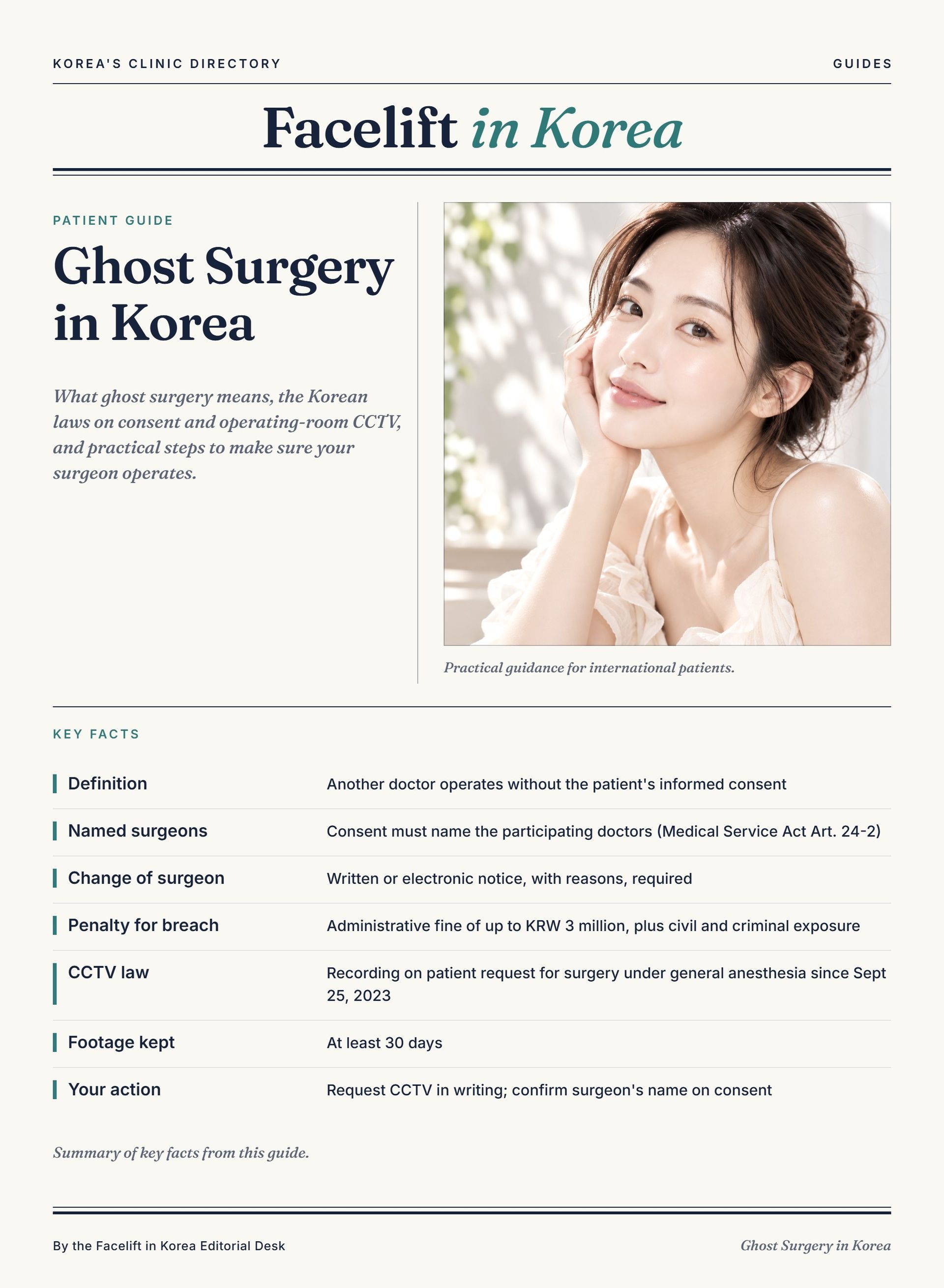
| Definition | Another doctor operates without the patient's informed consent |
|---|---|
| Named surgeons | Consent must name the participating doctors (Medical Service Act Art. 24-2) |
| Change of surgeon | Written or electronic notice, with reasons, required |
| Penalty for breach | Administrative fine of up to KRW 3 million, plus civil and criminal exposure |
| CCTV law | Recording on patient request for surgery under general anesthesia since Sept 25, 2023 |
| Footage kept | At least 30 days |
| Your action | Request CCTV in writing; confirm surgeon's name on consent |
Read next
Reader questions
Frequently asked questions
Is ghost surgery illegal in Korea?
Concealing a change of surgeon breaches the Medical Service Act's consent and notice rules, which carry fines. Depending on the facts, it may also lead to civil damages and criminal charges such as fraud.
Can I ask for my facelift to be filmed in Korea?
Yes. Since September 25, 2023, clinics must record surgery under general anesthesia if you or your guardian request it, with limited exceptions.
How long is operating-room CCTV footage kept?
At least 30 days under the law. Ask the clinic to preserve it if you have concerns.
Does CCTV apply to surgery under sedation?
The law covers surgery under general anesthesia or other states where the patient is unconscious. Ask your clinic how it applies to your anesthesia plan.
Is it normal for assistants to help my surgeon?
Yes, assistants commonly help under the lead surgeon's supervision. What matters is that you know who the main surgeon is and that they perform the key steps.
Next steps
Planning a facelift in Korea?
Compare clinics, check surgeon credentials and estimate your full trip budget before you book a consultation.
Facelift in Korea is an independent information directory. We do not perform procedures, and listings are not endorsements. This page is general information, not medical advice.