


Home › Facelift Costs › How to Pay for Surgery in Korea
Costs
How to Pay for Surgery in Korea as a Foreign Patient
By the Facelift in Korea Editorial Desk · Independent · How we report

The short answer
Quick answer: Most Seoul clinics accept Visa and Mastercard, cash in won and bank transfers. American Express is less widely accepted. Clinics usually ask for a deposit, often 10–30%, to hold a surgery date, with the balance due on or before the day of surgery. Pay in won to avoid conversion mark-ups, and always get an itemized receipt and a written refund policy.

How do foreign patients usually pay for surgery in Korea?
Seoul clinics that treat international patients are used to foreign payment methods. Most accept several options, and many will explain the process in English. Cosmetic surgery is self-pay. Korean national health insurance does not cover it, and clinics generally do not bill foreign insurers.
Which payment methods are accepted?
- Credit and debit cards: Visa and Mastercard are accepted almost everywhere. American Express and some other networks are accepted less often, especially at smaller clinics. Tell your card issuer about a large overseas payment in advance, and check your daily limit.
- Cash: Korean won is simplest. Some clinics may offer a small discount for cash, but always get an official receipt. Carrying very large amounts of cash has its own risks, and you may have to declare large sums at customs.
- Bank transfer: International transfers are common for deposits and large balances. Allow several business days, and cover any intermediary bank fees so the clinic receives the full amount. Some patients use money transfer services, but confirm the clinic accepts them.
How do deposits work?
Many clinics ask for a deposit to reserve the surgeon's time and your surgery date. This is often around 10–30% of the surgical fee and is usually paid two to four weeks before surgery. The balance is usually paid at the pre-operative visit or on surgery day. Before paying a deposit, get these points in writing:
- The total price and exactly what it includes
- The amount of the deposit and when the balance is due
- The cancellation and refund policy, including what happens if the surgeon decides surgery is not suitable for you at the in-person consultation
- What happens if you need to change dates because of illness or travel problems
Be cautious of any clinic or agent asking for full payment long before you have met the surgeon in person.
How can I avoid extra currency costs?
When a card terminal offers to charge you in your home currency, choose Korean won instead. This "dynamic currency conversion" usually uses a less favorable rate and can add around 3–5%. Check your card's foreign transaction fee before travelling. Exchange rates also move: in 2026 the won ranged from roughly ₩1,320 to ₩1,560 per US dollar, so the dollar cost of a won quote can change noticeably between booking and paying.
What paperwork should I keep?
- An itemized receipt showing the procedures, the clinic's business details and VAT
- A copy of the signed consent form and treatment plan
- A summary of the operation and discharge instructions, in English if possible
- Records of any deposit and transfer
These help with follow-up at home and are important if a dispute ever arises. See medical disputes in Korea.
What should international patients know about agencies and payment?
If you book through a medical tourism agency, ask whether you pay the clinic directly or pay the agency. Korean law requires agencies that recruit foreign patients to register with the government, and caps the commission clinics can pay them. Paying the clinic directly with a clinic receipt is usually the clearest arrangement. Our guide to medical tourism agencies explains the pros and risks.
Is there still a VAT refund?
No. The VAT refund for foreign patients' cosmetic procedures ended on 31 December 2025, and had not been restored as of October 2026. See VAT and tax refunds.
How should I plan the money side of my trip?
Decide in advance how you will pay the deposit, the balance and your daily costs. Many patients use a card for the surgical balance, a little cash for taxis and small purchases, and keep a separate reserve for extra nights. Our total trip budget and hidden costs pages help you plan the full amount.
This page is general information, not medical advice. Decisions about surgery should be made with a qualified, board-certified plastic surgeon after an in-person examination.
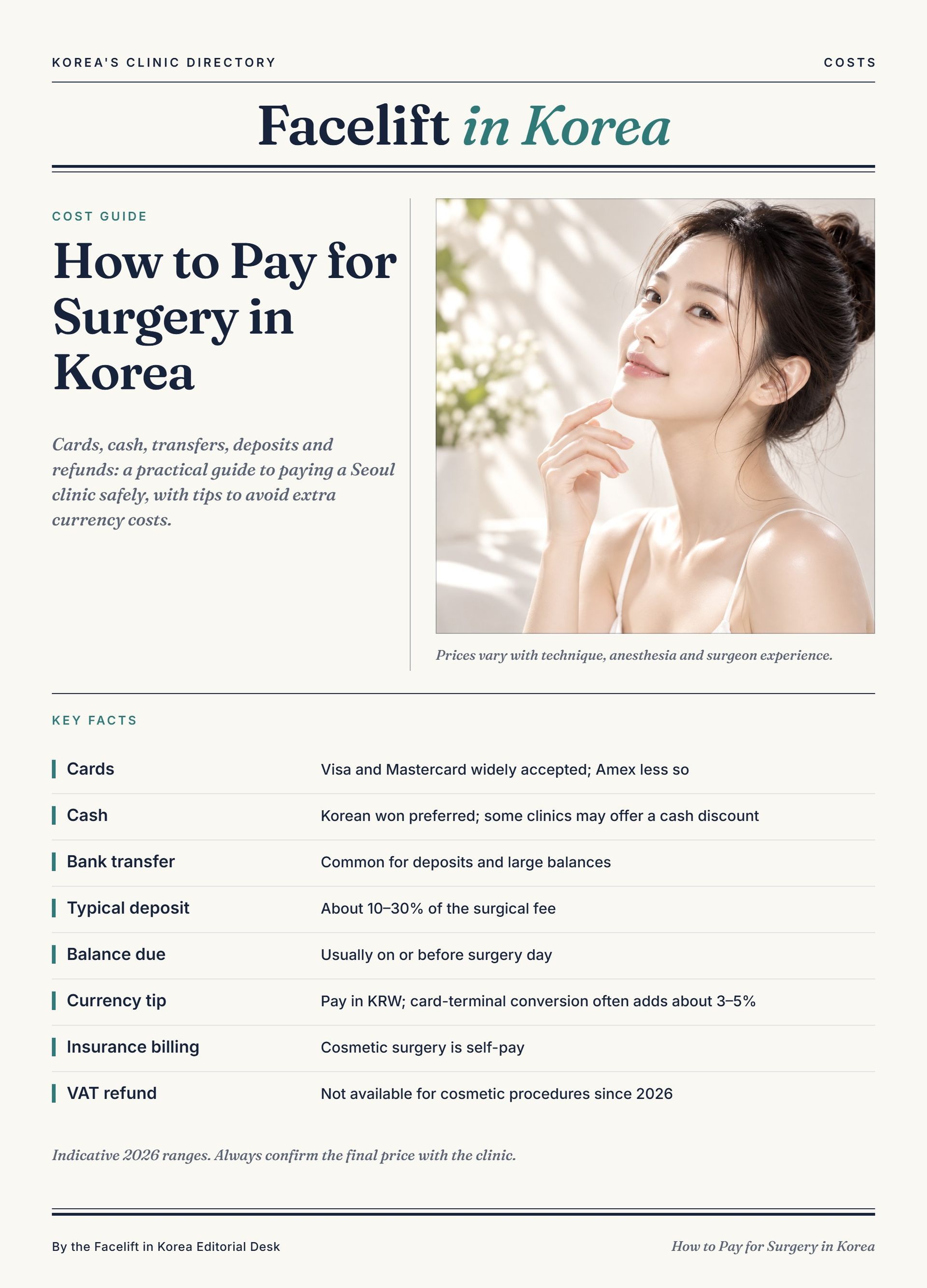
Key facts
| Cards | Visa and Mastercard widely accepted; Amex less so |
|---|---|
| Cash | Korean won preferred; some clinics may offer a cash discount |
| Bank transfer | Common for deposits and large balances |
| Typical deposit | About 10–30% of the surgical fee |
| Balance due | Usually on or before surgery day |
| Currency tip | Pay in KRW; card-terminal conversion often adds about 3–5% |
| Insurance billing | Cosmetic surgery is self-pay |
| VAT refund | Not available for cosmetic procedures since 2026 |
Read next
Reader questions
Frequently asked questions
Can I pay for a facelift in Korea by credit card?
Yes. Most Seoul clinics accept Visa and Mastercard. Check your card limit and tell your bank about the payment in advance.
How much deposit do Korean clinics ask for?
Often about 10–30% of the surgical fee, paid a few weeks before surgery. Get the refund policy in writing first.
Should I pay in US dollars or Korean won?
Pay in won. Accepting conversion into your home currency at the terminal usually costs more.
Do Korean clinics offer payment plans for foreigners?
Rarely. Most expect full payment by surgery day. Some patients use their own credit card or financing arranged at home.
Can I pay the agency instead of the clinic?
Some agencies collect payment, but paying the clinic directly with an official receipt is usually clearer. Check that any agency is registered.
Next steps
Plan the whole budget
Surgery is only part of the bill. Add flights, two weeks of accommodation, interpreters and follow-up care at home.
Facelift in Korea is an independent information directory. We do not perform procedures, and listings are not endorsements. This page is general information, not medical advice.